Beside Every Struggle Is a Gift: The Art of Neurodivergence
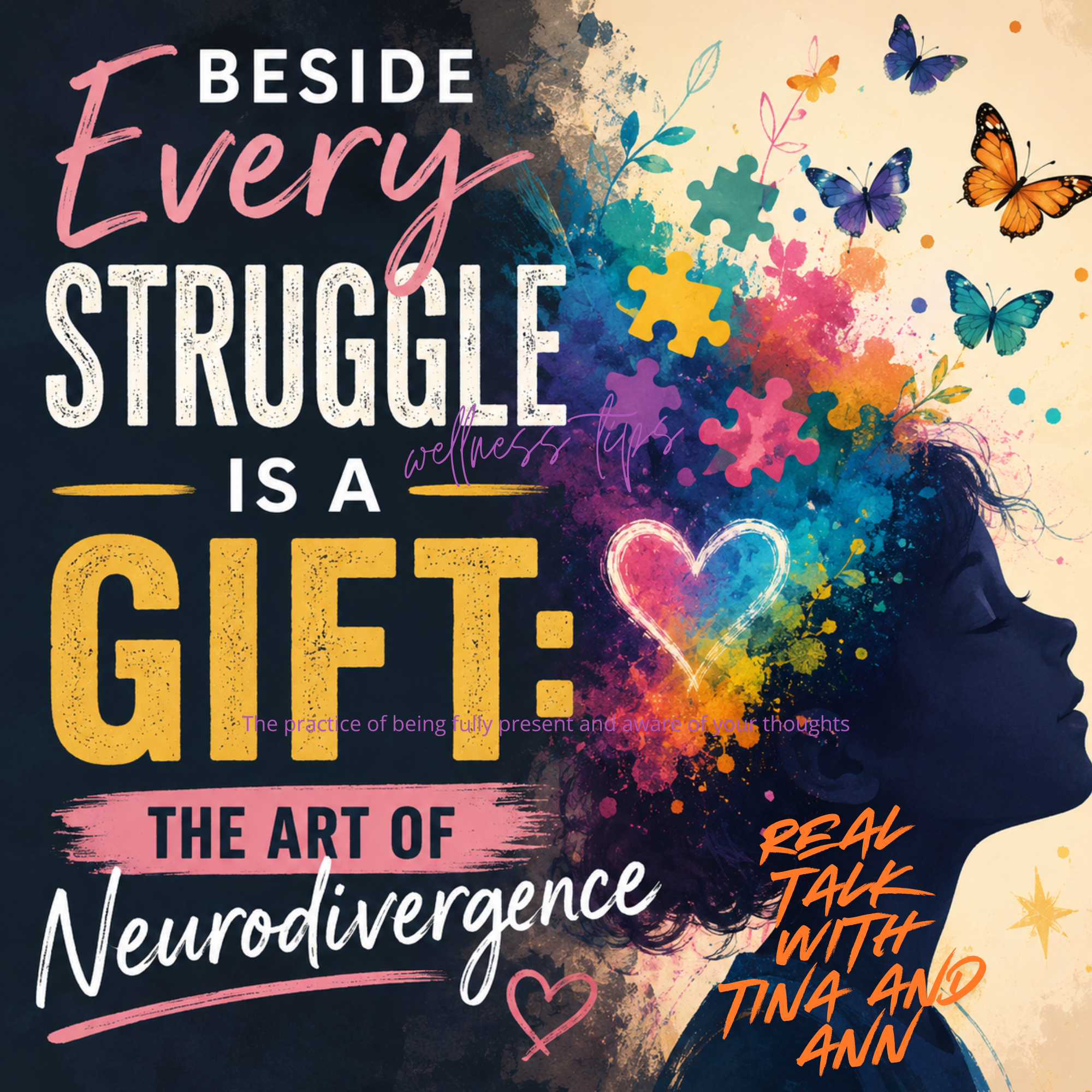
Beside Every Struggle Is a Gift: The Art of Neurodivergence
For far too long, we have been taught to view neurodivergence through the lens of deficits.
What can't this person do?
Why are they struggling?
How do we fix this?
But what if we've been asking the wrong questions all along?
What if, beside every struggle, there is also a gift?
As a neurodivergent woman, an adoptee, a mother of neurodivergent children, and someone who has spent decades working in helping professions, I have learned that the things society often labels as weaknesses are frequently connected to incredible strengths.
The world is quick to identify differences. It is slower to recognize the beauty that often accompanies them.
Neurodivergence is not one thing. It can look like autism, ADHD, dyslexia, FASD, sensory differences, learning disabilities, anxiety, or a combination of many things. Every individual experiences the world differently, and no two people are the same.
But one thing I have learned is this: every struggle tells only half the story.
Beside every struggle is a gift.
The child who cannot sit still may also be the child bursting with creativity and ideas.
The person who struggles socially may also be deeply compassionate and extraordinarily observant.
The individual who processes information differently may see patterns, connections, and solutions that others miss entirely.
The person who needs routine may become someone others can always count on.
The person who hyperfocuses may possess extraordinary talents and passions.
For years, many of us were taught to hide those differences.
We masked.
We adapted.
We tried to fit into systems that were never designed for our nervous systems in the first place.
We spent so much energy trying to appear "normal" that we forgot to ask a more important question.
What if different isn't wrong?
What if different is simply different?
As a mother, my children have taught me this every single day.
I have watched children who struggle with communication become some of the most genuine people I know. I have watched children who need extra breaks show incredible perseverance. I have watched children who face enormous challenges continue to show up with joy, humor, and kindness.
They have taught me that our differences are not obstacles to overcome. They are part of who we are.
That does not mean neurodivergence is easy.
There are struggles.
There is frustration.
There are systems that do not always understand.
There are days that are exhausting.
But two things can be true at once.
Something can be hard and still be beautiful.
A struggle can exist beside a gift.
I also believe many neurodivergent individuals develop extraordinary strengths because of what they have had to navigate.
We become resilient.
We become problem solvers.
We become advocates.
We become deeply empathetic because we know what it feels like to not fit.
We become people who see those who are often overlooked.
For many of us, that becomes our superpower.
I spent much of my life believing I needed to become less of who I was in order to belong. Now, I understand something very different.
The world does not need less neurodivergence.
The world needs more understanding.
It needs more accommodations.
It needs more acceptance.
It needs more curiosity and fewer assumptions.
Most importantly, it needs us to stop asking, "How do we fix this?" and start asking, "What gifts are we overlooking?"
Because somewhere along the way, we forgot something very important.
Human beings were never meant to be identical.
We were meant to be different.
The art of neurodivergence is not about eliminating struggles.
It is about learning to see the whole picture.
It is about recognizing that our brains were never broken.
They were simply wired differently.
And perhaps the greatest gift of all is this:
The very thing you have spent your life trying to hide may be the exact thing the world needs most.
Beside every struggle is a gift.
We just have to be willing to see it.

Writer/Podcaster
What do I say about myself? I love telling other people's stories, but hmmmm...Let me think.
When I think about my life, I have so many chapters. I am a very compartmentalized person.
I am first of all a mom of 5 kids. Yep...5!
I am a grandma to 5 beautiful children! All gingers lol.
I am a writer, author, podcaster, oh my gosh...I've been a journalist, columnist, hard news writer for print. I have actually won quite a few awards for my writing.
I am a photographer. I LOVE getting the money shot and capturing life! I do have a website called Spectrum Photography, but I have it offline more than on because I cannot figure out how to make the pictures work on Etsy lol. I'm not good at that kind of stuff.
I very much am an autistic individual, ADHD and dyslexic. Yep I got it all lol. I'm not that great a executive functioning, but I have many great ideas! I am trying to put things into fruition, but it just takes me longer and I probably make more mistakes, but I don' give up!!!
I have had many lives in the working world. I've worked in the jail system with helping women and talking with them, praying with them. I was the director of a battered woman's shelter/rape crisis center. I oversaw the crisis hotline at the center. I worked with abused boys. I was an Assistant Director at a school for kids with autism. I was a head swim coach for 12 years. Yep--former swimmer myself lol.
I was adopted. I've adopted 5 kids. And if you want to know the history of my crazy buffet of a family lol...I will tell you, but … Read More
Loving Differently Tool Belt