Returning to the Place that Made you: Identity and finding Lost Memories with Mario Cartaya

Send us Fan Mail This week’s episode is one everyone needs to hear—a story of miracles, identity, and the kind of closure most people never expect to find. In his book Journey Back into the Vault: In Search of My Faded Cuban Childhood Footprints, Mario Cartaya shares a life that began in Havana and was forever changed when he fled Cuba at just eight years old. He went on to build an extraordinary life in the United States as a celebrated architect, shaping communities across South Florida and...

 Apple Podcasts

 Spotify

 Castro

 RSS Feed

 Amazon Music
This week’s episode is one everyone needs to hear—a story of miracles, identity, and the kind of closure most people never expect to find.
In his book Journey Back into the Vault: In Search of My Faded Cuban Childhood Footprints, Mario Cartaya shares a life that began in Havana and was forever changed when he fled Cuba at just eight years old. He went on to build an extraordinary life in the United States as a celebrated architect, shaping communities across South Florida and earning national recognition, including a flag flown over the U.S. Capitol in his honor. He even worked alongside leaders like John Kerry, helping bridge conversations between countries.
But decades later, something still called him back.
After 56 years, Mario returned to Cuba—and what happened next is almost impossible to believe. In a moment that feels nothing short of miraculous, Fidel Castro’s son personally led him to his family’s long-lost graves. There, Mario stood, prayed, and began reconnecting with the pieces of himself he thought were gone. Along the way, he unexpectedly met a 90-year-old relative simply by driving down the street, as if the past had been waiting for him all along.
This isn’t just a story about going back to a place.
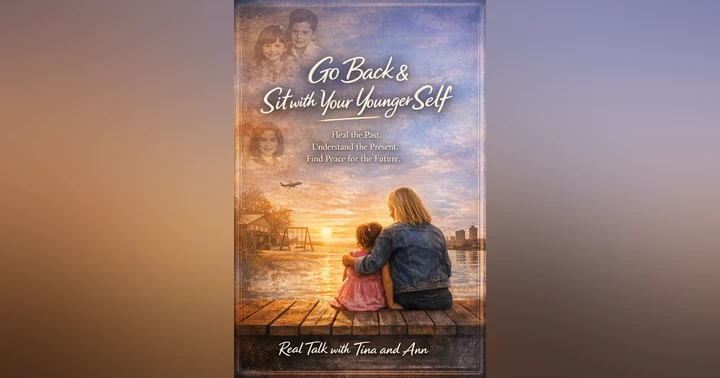
It’s about meeting your younger self again.
About rediscovering memories.
About finding identity, belonging, and a sense of peace that no amount of success could replace.
And this is only Part 1.
Go to Mario Cartaya's website at Mario Cartaya – Journey Back Into The Vault
@Real Talk with Tina and Ann
00:00 - Welcome And The Memory Vault
02:53 - Childhood In Havana Before Exile
04:22 - Che Guevara And A Forced Exit
07:54 - When Early Memories Go Dark
10:41 - Grief Without Goodbyes
12:49 - Achievement As A Love Letter
14:05 - Miami Culture Shock And Halloween
18:01 - Parents’ Strength And Music At Home
21:57 - The Moment He Chooses Return
25:37 - Landing In Cuba And First Flashbacks
29:19 - A House Preserved For 56 Years
35:53 - Finding Family In A Fading Town
39:43 - The Balcony And Meeting His Child
49:25 - Cemetery Closure And A Shock Call
58:08 - Part One Ends Part Two Tease
0:08 Welcome to Real Talk with Tina and Anne. I am Anne. Today's conversation is about something deeply human: memory, identity, and what happens when parts of our past become locked away inside of us. My guest today is Mario Cartaya, author of the memoir Journey Back into the Vault in Search of My Faved Cuban childhood footprints. Journey Back into the Vault is a deeply personal memoir about a Cuban-born American who returns to his homeland after more than half a century in search of the childhood memories he lost when his family fled the country during political upheaval.
0:51 Mario was born in Havana in 1951 and spent part of his childhood in Cuba before his family was forced to leave and start a new life in the United States. That sudden separation from his homeland and extended family left a lasting emotional impact. And over time, many of his earliest memories faded from consciousness almost as if they had been locked away inside a psychological vault. Imagine leaving everything that you knew before you were even old enough to understand what was happening. Your home, your language, your culture, your memories.
1:32 Mario spent decades building a life in America, but something fascinating happened along the way. The memories of his earliest childhood years became buried somewhere deep inside his mind. Then more than half a century later, he returned to Cuba 56 years later, not as a tourist, but as a man searching for something hidden inside himself. His journey back became more than a physical trip. It became a search for identity, belonging, and the pieces of his childhood that had been buried by time and circumstance. Mario began to recover the memories and feelings that had been hidden for decades.
2:14 It's a story about exile and ultimately finding peace with the child you once were. Mario, thank you so much for being here today. And thank you so much for having me here and for this wonderful interview. You know, I want to start at the beginning because you were born in Havana in 1951 and you spent the first years of your life there when all the political upheaval was going on and your family was forced to leave. For listeners who may not know that history, and I mean, actually, your father's life was being threatened. Can you paint a picture for us of what exactly was going on? Well, I I grew up in a middle class family, and in my home, everyone had a college education, and both sides uh would favor a different part of uh their education, right?
3:08 I being my Mateo side, they were all very artistic, uh musical, art drawing, that kind of a thing. And I grew up with them. I grew up with them playing their instruments. My mother was a classical pianist, so she would always play the piano and and as they played, we talked. Uh, the other half of my family, my Cartaya side, um, my paternal side was was more accountants and money and this type of thing. Um, so I I grew up in a nice combination of right side and left brain, um, where I it was wonderful for my education. Everything was wonderful.
3:49 We lived in a big home uh where uh I lived with my grandparents and my uncles. It's an old Spanish uh way of living where the family, the extended family, lives together and you're with them your whole life, right? You become uh a child to many adults, uh their own child, right? So it's a wonderful way of learning, a wonderful way of uh of loving, a wonderful way of uh knowing that you belong to something greater than yourself. Everything changed. Um when Castro came to power uh a year later, uh he made the announcement that they were going to confiscate all American properties on the island.
4:35 My father, who was an accountant, his clients were all American. Uh Frigid Air Corporation, the Sylvania uh group, Emerson, they were all his clients. So sooner rather than later, three uh machine gun toting rebels entered office demanding his um ledgers with all the information on his client, his American client's properties in the island. Oh my. My father, uh, out of loyalty refused. So he was detained. In his detention, he refused a second time, and they took him to go see the infamous Che Guevara, uh, the uh Argentinian Kerrilla warfighter that was trying to bring communism to South America, who lived in Cuba during those first years of Castro's uh revolution.
5:29 Uh and my father denied Guevara. Well, you didn't do that back then. So Guevara, furious with my my father, drew his gun and said, Ignacio, that was my father's name. I know that you have two kids. Uh don't make me use this. And he showed him the gun and I said, Give me what I want. So, with that, thankfully, he also had a friend, uh a lieutenant, they were friends since kindergarten. They grew up together. He stood between my father and Guevara and said, Shay, hang on, I know Ignacio, little bullheaded, but give me until noon, and I promise I can get you uh his ledger.
6:12 So he did. He went with my dad, my dad gave the ledgers, and when they brought it back to Guevara, Guevara's last words to my father was, uh, you're you're now uh labeled um anti-revolutionary. If I were you, I would leave the island as quickly as you can, because I can't guarantee your future safety. And so we thought that he was dead. He was gone for about three days, and back then, if you disappeared, yeah, three days, you were usually dead. This is 1960. So he finally calls and says, I'm coming home. The whole family got together, and then I watched him from the second floor balcony of my home as he asked my extended family for permission to leave Cuba with my mother, my brother, and me.
7:04 I imagine an eight-year-old boy happy that his father is home, now having heard that they were gonna kill him. And that's why he gave him the ledgers, and that's why we had to leave. Um and so that day my my life changed. I knew that my time in Cuba was coming to an end, and I knew that I would have to then travel to the U.S., which was exciting too. I mean, the U.S. was the home of Mighty Mouse and Major League Baseball and hot dogs and all this wonderful thing, cowboys and Indians. So it wasn't that bad leaving, except once you leave and you never see your extended family again, the grandparents, the uncles that I grew up with, they all died and we never saw them again.
7:50 Yeah. Then it becomes a trauma. Oh my goodness. How horrific. I mean, in one second you're here, and in the next second, you're here. I mean, and and then what was so unique about your story is that you much of your life, those early years, were completely hidden from you. I mean, you couldn't remember anything before your 10th birthday. Before this journey back to Cuba, how did you piece your life together? Were those early years something that you understood through stories your family told you? Photographs, fragments, or was it mostly like just a blank space? It's kind of an interesting mix of everything, right?
8:31 My parents grew up uh telling us stories, and you know, we we had a wonderful family of conversation. We love to talk to each other and express each other's and communicate that way, right? Okay, yeah. And so I knew some stories, and then we had some pictures that we took with us when we left. So I knew some still black and white pictures. So at night sometimes I would see those pictures, but I didn't know the context. And I would wake up in the middle of the night, you know, kind of like um flustered because I knew that I saw that picture for a reason in my in my dreams, but I didn't know why.
9:14 It's funny. Even during sleeping, uh my subconscious was controlling my mind. So uh finally, after um a a wonderful uh award that I received where they flew a flag uh in the US Congress in my honor, or over the Capitol, over over the US Capitol and my honor, I couldn't remember how I got from there to that point. And that's when I decided it's time for me to go back and try to remember. Try to know who trying to know not just who I became, that I knew. I knew I'd come here and I've become a a renowned architect.
9:58 What I didn't know was what was the whole story? Why why act the way I do? Why do I feel the way I do? All those things that that shape the way you are when you're young. Yeah. Yeah, that is such an important piece. I mean, everybody needs that in order to figure out who you are. I I mean, I it I think that you do. You left Cuba. Was the part of your life from going from Cuba and landing in the United States? I mean, you painted it as this wonderful place coming to the United States. But was that blank too when you got here? Or when did your memories actually begin?
10:40 I had very few memories. Um, but I think that they did not disappear as I was flying uh to come here. I think they disappeared slowly as some of these memories tormented me. You know, back then, uh in 1960, there was no communication with Cuba. And in the years that followed, with the Bay of Pigs and the Cuba Missile Crisis and everything else that happened, there was no telephone uh uh combinations that you could somehow get in touch with your family there. There was no letters. The letters that we would receive were many times redacted, many times cut out with scissors, you know, places.
11:25 So it was very minimal information, if any, that we were getting about the family we left behind, except through telegraphs. And the telegraphs were limited to eight letters. So we will get things like your grandfather died. That's it. And you don't know how or when or whatever. So it was very, very difficult to see your family go one after another after another after another. And by 1968, eight years after I got here, all of my grand my grandparents and even my uncle were over. And I think during that process of grieving and and the frustrations of not being able to get in touch with them, the impotence, the impotence of not being able to do anything about it.
12:12 Not even to call them and tell them you love them, I think that that little that little descent is what finally turned off the uh subconscious to allow me to concentrate and then become, you know, the best that I possibly could be, the best version of myself. Yeah. I mean, the mind is kind, really. I mean, it it can protect us from our own pain. And it sounds like that's what it was doing. Can I ask you how this has shaped you into the person that you became? That's a great question, right? Um, I became a well-known architect.
12:56 And why that happened, I think that in my subconscious as well, not almost, but in the subconscious that I grew up with, not having my grandparents with me, not having my uncles with me, uh made me want to prove to them that everything that they used to tell me when I was growing up was true. And I think that without knowing it, uh, I pushed myself for them. Okay. And I never accepted mediocracy, I never accepted anything that wasn't just, you know, the very best.
13:37 Uh I guess to to make it right, to make them know, wherever they were, that yeah, all the effects that they had on me uh made me into this person that I am. That was, I think, the big incentives uh that I had without even knowing uh what I was doing. Uh going back, however, is what really, really made a big difference on me. And we're we're absolutely going to get to that part of this story, but I want to ask you, you know, as a young immigrant arriving in Florida, did you ever feel like you were stuck between two worlds?
14:18 Like, did you ever feel a part of either one, or were you like stuck in the middle? I felt that way my whole life. Really? Except after coming back. Okay. Because there was a part of me that couldn't remember, and that part had a play in me, but not a conscious play. So there was always that. I was the kid that um I was friends with everybody. So I had American friends, okay. I played football, I, you know, I was a good student, I played baseball, you know. Uh I was that guy.
14:59 I'm always wanting to prove that I belonged, always wanting to prove that I was worthy of having this uh accolades that I grew up getting from the teachers, from my friends, and and that kind of a thing. Um I will tell you a really funny story, right? Okay. I I knew about American culture a little because my some of my father's clients, when they would travel to Cuba to have meetings with my dad, they would always come home. Uh, and my mother and this other lady that helped us would always cook them a good Cuban meal. And they always wanted to get their business over with so they could come over and enjoy a good meal with us, with a family, right?
15:45 And uh to me, the Americans that came over being little uh were not Americans. They were Cubans that spoke English. It was it was that kind of a view from a child. I saw no difference. The school that I went to, the Edison Institute, um, was a prep school, and they taught a little English, just enough to get by, you know, which helped me when I first came here. At least I knew some basic words uh that would either get me out of trouble or get me in trouble, you know, depending on the context that I used to. Right. I learned uh I learned that very, very soon. Um but one one fun one funny story, right?
16:30 So we leave Cuba, the plane lands here. It's still like 10 o'clock in the morning by the time the plane lands, and that afternoon I figured I'm gonna go for a walk. I'm in America, I'm in Miami, I'm gonna go for a walk and see what America looks like. Really, I'm hoping it's gonna snow. It was November. I'm hoping it's gonna snow, there was no snow. But I went for a walk. And I began seeing that in front of everybody's homes, there are ghosts and there are monsters and there's people with knives in their heads, that kind of thing. And I got scared. To my dad, and I said, Um, do they practice voodoo in the United States?
17:10 And he's like, No, no, they don't do voodoo. Uh why? And I told him why. And he goes, Oh, Mario, it was uh Halloween two weeks ago. And these are people that haven't picked up the stuff they had in their front yards. And they displayed ghosts and monsters and devils and this. Yeah, yeah, but it's it's all in fun because they'll get they'll give you candy. Can we go out tonight? Oh no, no, no, no. Thanksgiving is all. So that was my first my first understanding of the American people was that. Oh my gosh, that's oh, that's hilarious. Yeah, I know. I know it was funny.
17:51 Funny story. Yeah, that is really interesting. I mean, you guys didn't celebrate Halloween over there. No, no idea. Oh my gosh. I I I wanted to ask you about your parents because you know, when you look back now as an adult, did you have conversations with your parents? Did they carry all of this quietly? Do you know what the moment was like for them having to leave? Oh, very, very difficult. And uh when my grandfather was dying, um, my dad asked me never to cry in front of my mother because she was distraught, right? Imagine losing your parents, never seeing them again, you know, your uncles, the aunts, everybody that we left behind little by little, every year somebody would die, and it was just like a constant drip of death.
18:44 So I I know that it was tough for her, but what my mom did uh to kind of help herself was play the piano. You know it even here, we were able to buy a used piano that she could play in, and it helped everyone because she would play her music, and um, they would bring the friends that they were making in the U.S. They couldn't afford to go out anywhere. You know, we were trying to start again. So they would invite him to the house, and my mother would play and they would all sing or dance or whatever. And it was a very healthy way to grow like that. You know, yes, there are troubles, but it's okay.
19:26 You know, we will get by. And and this one time, uh, my mom looked at me and I was kind of sad, and and she said, uh, Mayito, that means Little Mario, uh, don't feel that way. As long as we're together, everything is gonna be okay. Those are words that have come back to me thousands of times. And I love it. No matter what, as long as we're together, it's gonna be okay. We're here for each other, we're here to help each other, and that's exactly the way that it was. It was beautiful, uh difficult, yes, painful, yes, but also beautiful.
20:08 It is very beautiful. That what I I want to say that to my kids now. You know, I mean that's just it just uh brings a connection that can't be divided. It it can't be, no matter what. What did it do for you to realize what your parents sacrificed? Well, I I I I've been speaking a lot for years, you know, with my architecture and all these award ceremonies. Uh, they always ask me to speak, and I always tell them that um I dedicated my life to them to show them that their effort of coming here was worth it.
20:53 It's not about me so much as it is having to prove that everything that happened uh led to these accomplishments and this great life that I have lived. That's uh probably the the biggest impact uh that anything has ever had in my life. I I know why I'm here, I know the challenges they faced, I know the hardships and pain that they felt that they felt, but yet they always made it seem like tomorrow was gonna be better than today. They always lived with an optimism. But hey, as long as we're together, it'll be fine.
21:34 And it was, it was for all of us. I love this because it really is all about perspective, isn't it? It really is. I mean, we all we go through such hard times, but it is it sounds like your parents were so strong, and then they passed that down to you. What a gift! Yes. The title of your book, Journey Back into the Vault. Is such a powerful metaphor. I mean, it suggests the memories weren't gone. You know, I mean, they were just simply locked away. And when you decided to return to Cuba after 56 years, what made you feel ready to open that vault?
22:18 I was part of the committee that assisted President Obama in his reproachment return to Cuba. Okay. I met with uh the person that was in charge of that committee was John Kerry. And John Kerry and I kind of struck up a nice friendship. And we had a lot of conversations about him going back to Vietnam after the Vietnam War and making peace with Vietnam's generals. Wow. And that kind of enlightened me a little bit. That really peace lies within yourself. You just need to go get it.
22:58 You need to be confident enough that yes, I can I can bring peace to me if only I can figure out how to do it or put myself in a position to be able to do it. So when when the group went back to Cuba with the president, I didn't go. Because I did not feel like I wanted to, like I was ready to do something like that. But I did watch the president's uh address to the Cuban people uh in Havana. And he started with this wonderful poem that was written by José Martí. Jose Martí is uh a Cuban patriot during the Spanish-American War.
23:44 Uh and he had this um book that he wrote, in which he wrote, I cultivate a white rose for my friend. I also cultivate a white rose for my enemy. In peace. And that's how he started his speech. And all that I could do was think of John Kerry, think of myself, think of my grandparents, think of everything. And that moment, I turned to my son who was watching it with me, and I said, buddy, I gotta go back. And he says, he said, I knew you would.
24:25 That was the uh enlightenment, that was the moment that the candle lit up and said, You're going back. You need this, you need to know who you are, you need to piece your life together somehow. You need to piece your life together. And I did. Oh my gosh, that is so beautiful. Well, how old was your son, by the way? At that time, uh, he was about 22, 23 years old. Okay, all right. Has he ever been? I took him with me the following year. Okay, interesting.
25:06 Um, I do want to talk about you returning back to Cuba. And after more, you know, the fit more than a century later, 56 years from the place where your life began. And when your plane landed in Cuba, like if you can place yourself there in that moment, what was that like, that feeling that came over you when you actually landed and you were on Cuban land? Well, um, there was a little process that happened uh of accepting where I am, right? At first, I'm landing and certain feels, feelings of guilt um found me, you know.
25:51 But then at the same time, uh something inside me said, fine, you know, uh I know where this is coming from. But I'm just gonna go through it because I want to. You're not gonna conquer me. I am gonna go through this. And then as I began to come into the terminal, I realized this is the same terminal. This is the same space from which I left. That was the first memory that came back. Okay. This is the same place from which I left in much turmoil, in much pain, uh, confusion, people screaming, you know, uh, people crying.
26:36 You know, it it wasn't a fun place to be, as all of us Cubans were leaving on that airplane uh on that plane, right? Uh, but I'm back. But then again, right after that, first thought hit me, then the next thought here hit me. And again, that was the first time that I see what's happening. Because the next thought was, ah, but I am not leaving today. A son of this country is returning, and this is my portal to happen.
27:17 Funny how when when the uh memories begin to return, you understand why they're returning. I thought about the past, stopped on the dying. Now I think, okay, I'm back. I gotta get through this in order to find what I'm looking for. This is the portal that I have to get through. And it was a beautiful realization. Of course, just minutes later, I see this old man that I saw in Miami with the huge teddy bear, right? And I realize some lucky girl or boy in Havana is gonna be getting this big old, you know, stuffed bear from this old man.
28:07 And just as I walked outside, there's the old man, here comes a little girl, maybe nine, the age that I left, right, running towards him. And immediately she goes, Abuelo, which means grandfather, and jumped up into his arms and hugged him. The old man began to cry, and then he said, Honey, this bear needs a friend. And it was good. Love exists in the island. Let's go find it. And little by little, it was a welcoming that got me ready to do everything that I did.
28:52 Of course, things that happened, I would have never thought that they would ever occur. There were surprises in every corner. Well, you you went back to your home, your school, the streets where you once played, and family grave sites. I mean, what was it like? What were some of those surprises that happened? Well, imagine this. I just got back, I just saw the old man with the the girl. So from there we make it to the hotel, laid our bags down, and our driver that my friends and I, I went with two friends, right? The driver that my friends and I had hired is already there at the hotel to take us.
29:37 First place we go to is the last house that I lived in Cuba, the house from where we left. And I had heard years before from someone that there was a man called Hector that lived in that house. We parked the car, we get out of the car, we walk. There's this man talked in with two people on the other side of the uh changling fence that protects the property. As soon as they saw me with my two friends, the two guys that were there left. The old man didn't. He stayed there and looked at me. So I walked up to him and I said, Excuse me, are you Hector?
30:17 And he goes, Yes, I am. And you are. And I said, Mario Cartaya Mateo. Cartaya is my paternal surname. Mateo is my maternal surname. So I'm introducing me as you would in Cuba, where you use your paternal and maternal names so they know what families you belong to. I'm off the plane, I'm maybe an hour and a half off the plane. And he looks at me. He turns pale and he goes, Mario Cartaya Mateo, I've been waiting for you a long time. That's my first welcome. Oh wow. And I looked at him, and I figured I'm not ready to ask him why.
31:01 Let me get past the shock. So I showed him some pictures I had of my family and I and the house, and he's naming them. Oh my god. Then he says, Your uncle was my best friend. And then with that, I felt more comfortable. He knew my family. Right. So I asked him, Hector, what did you mean by I've been waiting for you a long time? So he goes, You don't know? And I said, No. He goes, Come with me. So he takes me inside the house. And I walked in, and immediately a thousand memories came back.
31:42 Oh my god. The furniture that we used, the house, the colors, the tile, everything is identical. He even said, look at this curio. I look in the curio, the dining sets, the utensils, the jello balls, even the beer glass that my uncle used to use uh for his um beer, it's all there. And of course, so emotional. I'm back. This is like it it never changed. Like if I had left the day before. And so I said, Why is everything the same?
32:24 And he said again, you don't know, do you? No, Hector, I really don't know. And then he reminded me. He says, When we found out that your grandfather was dying, uh my your your uncle, Marcus, uh made it seem like I lived here so that you all wouldn't lose wouldn't lose your home uh to the uh uh confiscation efforts of the government. So I lived here all these years under one condition that I would not change anything and give it all back to you when you return. So here it is for you.
33:04 If you want it, it's all yours. I never knew that. I never knew that. He was been waiting for me 56 years to return, which of course we never did. So I said, Look, I'm I'm only here uh for a week. I don't plan to stay. I just want you to be my friend. And he goes, No, I'm I won't be your friend, I'll be family. I said, Okay, then you can be family. And we made a friendship that has been beautiful. I mean, a 50-year promise. Yeah. Who makes that kind of promise and then keeps it? I mean, that kind of loyalty and humanity is very rare.
33:47 Yeah. What did it feel like for you to see that and realize that someone had honored your family's story for all of those years? Well, the first thing I learned in the airport was there's love in Cuba. Yeah. Then I said there is honesty, there is dignity, there is integrity in Cuba. This is not what I thought it was. The demons are gone. There are no demons anymore. It's just us. What a completely different perspective on how you lived for all those years believing what Cuba was like, and here you are getting a completely, I mean, eye-opening experience.
34:38 That's really amazing. And that these people were that loyal to your family, that he was so loyal to your family. I mean, you also got to meet a lot of other people in your family. Yeah, yeah. So, could you talk about what that was like? And did they help you fill in the blanks? About Hershey? Yeah. So um, when I went to Cuba, my mother was in her mid-90s and she was frail. So, of course, I couldn't take her with me. So she goes, Mario, can you maybe if you are going to Hershey, the town of Hershey, that's that's where Milton Hershey grew the sugar for his chocolates, right?
35:22 Yeah. And um, my mother, the first seven, eight years of her life she spent in Hershey growing up. And then when my father, my grandfather, uh got a job as the director of the Havana train station, uh, they all moved to Havana. And that's when she met my dad, and she met my dad at a bulk, a ballroom uh that played American big band music, and they met each other to In the Mood by Glenn Miller. Oh my goodness. Anyway, so there I am. I'm back in her scene, and um there's no sugar, there are no mills, there are no signs on the streets, there's no numbers on the homes.
36:04 It's dilapidated. I'm thinking, how am I gonna find her house? So I got my two buddies in the back, are going, hey, let's forget it. Let's let's go to Baradero Beach. I said, guys, guys, guys, no, no, no, no, you don't understand. I didn't come, I didn't come to Cuba to lose. I'm gonna find that house. Please support me. Okay, okay. They didn't say that nice, they used some other words that I I'm not gonna use today, but they want to go to the beach, you know, which is not that far away. So I told my driver, um, my Dell, why don't you drive real slow so I can look inside people's homes through their windows and see if I see a woman in her mid-90s who maybe even know my mother, who knows?
36:58 You know, right, right. He begins to drive real slow, real slow, real slow, and sure enough, this woman is seated in a wheelchair hunched over in her front porch, a screened front porch, and so I told my driver, stop. He did. I got out of my car, my friends, like always, came with me, and I approached her door and I said, Um, good morning. And she responds, good morning. I said, Can you help me? And she goes, Sure, sweetie, I can help you.
37:39 So I said, I'm looking for the house where the Mateo family grew. Uh, you you you used to you used to be. And her answer is, why on earth would you want to know where that old home is? I said, because I am Marcos Mateo's grandson. And this lady straightened herself up in her wheelchair, looked at me, and tears began to come out of her eyes. It's sad to see a 90-something-year-old woman crying in a wheelchair. So I said, Why are you crying? And she goes, My God, could you be my hito? Little Mario. Oh my goodness.
38:19 I said, Yes. Yes. And so George, one of the two guys that came with me, says, Mario, you better stay here. Uh, I'm I'm going with my Dell and Jose to the beach, and then my Dale will come back and pick you up later. You're gonna be here a while. I said, Yes, you're right. I'm gonna be here a while. And and so for the next three hours, three, four hours, we just talked and told stories about our families and what they've been doing since. Uh, she turns out to be a great aunt. I never knew was alive. I thought they were all dead. She was the only one that lived.
39:02 What are the chances of that? What are the chances? Yeah. I got chills when you were telling that story. I mean, that was meant to be. It was meant to be. Well, meeting with uh uh Hector was meant to be. Oh that was quite a welcome. That was the perfect welcome. I've been waiting for you a long time. I didn't hear it in the in the uh airport because all of my family's dead. But I heard it in the first place I went. But it was like also that your past and your now were coming together and your now was like welcoming your past and saying that to you, welcoming you.
39:43 The biggest moment when when that happened was in the same balcony where I saw my father ask for permission to leave. That was right towards the end where I went to the previous house that I lived in uh right before we moved into the Apollo house, which is the house from where I left. We moved to a brand new development. They were all new homes. And when they began building, and my father was doing very well in his accounting practice, said, okay, let's move there, right? And so I'm back in that other home. Um, and they let me in, and all the while that the guy that was there who remembered us, all the while that the guy is touring us through this house that I'm remembering step by step, something kept saying, go to the balcony.
40:38 I didn't know why. I call it my siren song. I kept looking at the balcony and then continuing looking at it again. It's like I could not get myself over the balcony. I did not remember that moment yet. That moment came back. But I I asked Hilberto, who was the son of the owner of the uh of the house. I said, Can I go up there alone? I think I need to experience something. I gotta go there. No, you can't. My mother is there, she's in a bad mood, she's got a bad headache.
41:22 Don't go in the balcony. I said, okay, can at least go up as far as the last uh stair tread. She goes, okay, you can go to the landing, he said. So you can be more comfortable, but don't go beyond that. Okay, okay, I won't. I don't want to deal with a woman that has a headache and isn't feeling well. No, no way. Uh so I did. I went there and I sat right at the edge of the stairs and looked down. And that's when the whole scene played out of my father asking for, and I remembered it. And it was extremely emotional.
42:03 I'm remembering everything that happened, everything I felt when I was eight years old, sitting there, realizing the future that was in front of me. And then all of a sudden, I looked and I saw my eight-year-old self sitting right next to me, looking at me. And it was weird. Mario, why are you seeing yourself when you're young? And then I realized, no, it's just a memory. So it's a strong memory. But in my mind, first thing that I thought is, look at me.
42:45 Look at how innocent I was. And then funny enough, my parental instincts kicked in. And it was like, I want to tell him that everything is going to be okay. I want to tell him, you know, all the things that are gonna happen. Uh so he always knows that it'll always be okay. But then it dawned on me. Um I don't have to. Because he's always been me, always been inside me. That's my past. That's what I came here looking for. And then he he just disappeared. And then I realized the importance of the moment.
43:27 He had all the memories. Me when I was nine, eight, sitting there, had all the memories. We divided that day. He couldn't come with me. And so there he was in my subconscious. That's where he lived. Far enough away. And at that moment, we teamed up again. He became me. And it was just a matter of memories and memories and memories and memories and memories returning some. Beautiful. That was one that I remember going into the garage of that house, and my grandfather used to, for fun, uh, do carpentry.
44:10 He would do beautiful sculptures and and also furniture. And one day I walked in there, the middle of a Havana summer, hot as can be, and he's sitting there sweating and planing some wood with the old planers, you know? Mm-hmm. And I remember looking at him and saying, Tata, that's what I used to call, ta-ta. Um, I feel something funny in my heart seeing you work that hard and sweat the way you do. Am I gonna be okay? And my grandfather getting up from his chair, coming over to me, holding me up in the air, hugging me, and then saying, Marito, you just gave me a great gift.
44:54 That feeling you have in your heart, that's because you love me, son. And I remember. And more than remembered what happened, I remember how I felt. And I remember thinking, so this is what love is. Because not only did the memories come back, but the way that I felt when I was making that memory came back as well. I was that age. What I now know that I didn't know then, is that um every time you remember something, you're really remembering the last time you recalled it.
45:36 And along the way, your brain keeps making bridges to fill in what is forgotten. Voices, colors, background, you know, all that. Right? But in my case, since I never remembered any of that, it was like it happened the day before. They weren't corrupted, not at all. So I didn't just remember my memories like reels, an entire conversation with the context inside the garage. The context, he was planning a piece of wood. There weren't pictures, there were movies, videos.
46:19 Because to my mind, to my conscious mind, that happened the day before. Because I had never thought of it for 56 years. Now I know that. I didn't know it then. I just knew that some wonderful things were happening to me and that there was a force greater than me at play. Wow. I you you painted that so visually, so beautiful. I mean, it was I just picture you sitting next to your eight-year-old self. Yeah. I mean, oh my gosh, that's just so touching. And and how you became one in that moment from who you were now in in that eight-year-old self, and letting yourself know that you're going to be okay, that you've always been you.
47:15 I mean, oh my gosh, I'm I'm getting teary. You know, I mean, that that um that's that's really a beautiful visual. And I'm so glad that you were able to have that. And you had to go all the way to Cuba to get that. The stimulus. You probably would not have had that kind of closure if you would not have ever gone back. No, absolutely. It it it was now. I know, I did know it then, but now I know uh that it was the stimulus. What happens, what they tell me that happened is that when I went back to my home, recognizing where I was, put me there.
47:59 Once they put me there, I'm in my subconscious already. So at that point, the subconscious says, let it go. He's here, he's inside the subconscious, let it go. So at every at every point of stimulus where I put myself in the subconscious, memories, not conscious, but the subconscious memories, I'm there already. That's the vault. Every time that I went somewhere and they brought back the memories, I'm inside the vault. I was preaching the vault. The vault is the subconscious. Okay. So going journey back into the vault.
48:40 The vault is two things. It's Cuba, which always has been a vault, but it's also that place in the subconscious where our memories that are quite not so good are kept away from us, so we don't spend our times thinking backwards, but we concentrate in the future. It's a survival mechanism. Now I know. Right. And it's a giving permission. It's allowing yourself to go there. And when the memories are revealed, to allow them to be whatever they are, the good and the bad.
49:22 The good and the bad, right? Because you you also visited the graves of your grandparents. Oh, yeah. That was yeah, uh, people you love deeply and and you never got to see them again. I mean, I'm sure that that was incredibly emotional. What was that like for you? And did you get other did other memories come back because of that? Yeah. Um I I knew that they were buried in Cologne Cemetery. That's a huge cemetery with more than a million graves at it. Um it's almost like a city inside of Havana, huge area. I didn't know where.
50:03 So we we drive there, we we go to the office, and I I'm talking to the lady in the records room, and I told her, I'm here to visit my um family's grave. Um, do you have anything listed under Marcos Mateo? Because he was the first to go. So I figure, okay, if it's the first to go, it'll be under his name. You know? Mm-hmm. And she comes back from the old records, and there are no computers. She goes into this huge vault of her own to find all these documents. She comes back, paper. I can't find anything under Marcos Mateo. I'm sorry. I'm not my heart fell. I thought that's one, that's one of the biggest reasons why I went.
50:48 I had to say goodbye. I need a closure. Yeah. And so then I remembered that someone told me that once that a person named Odio had buried us along with his family, because for a while you could not own your grave in Cuba. Communism, right? You can't own anything. That's private. So you can own your grave. So you have to be buried in a mass grave of people who died in your city that week. That kind of a thing. So, Mario, don't worry, there's a family called Odio who took care of you guys.
51:29 Okay. So, do you have anything named for this guy named Odio? Let me check. So she goes back, comes back again. No, I'm sorry, I don't have anything for that either. I'm about ready to give up. And then she goes, but I do have a grave with a Marcos Mateo. That's listed under a different name. Well, can I have him? Come with me. So she made me go to a corner of the office where there was there was nobody around, and she says, Um, I'm gonna give you the man's name and phone number.
52:10 Suffice it to know that this is Fidel Castro's son. What? Exactly. That's what this is Fidel Castro's son. So I said, Okay, look, I've spoken to American presidents, Argentinian presidents, Peruvian presidents. I can talk to Fidel Castro's son. No problem. Give me his number. So I called him up. Three rings later, he answers the phone in Spanish. So I said, hello, he goes, hello. I said, my name is Mario Cartaya Mateo. And he goes, Mayito? What? So I I stopped and I said, please. His name is Angel.
52:52 Angel. I said, Angel, um, how do I know you? Don't you remember? I said, No, that's why I'm here. To remember. He goes, ah, we knew each other from school when we were kids, we played together all the time. And then his mother had married my uncle after I left. And so there's a relationship there. And I knew this kid growing up in my school. Once he said it, then I went, Oh yeah, Angelito. Now I know who he was. But back then, you don't know.
53:32 Angel, Angelito. I mean, how many angels have I met in my life? Other than the ones who seem to follow me everywhere, right? Um so I said, Um, boy, yes, this is quite a surprise. He goes, Yeah, I kind of thought that it would be for you. I was hoping that you would you would call me someday. And so, you know, we went to the wedding together, right? And so he said, Have you have you been over to your family's grave yet? And I said, No, Angel, I have. That's why I'm calling you. Uh, somehow your name is listed with uh my family's grave. I'd like to know where it is, so I can go there and pray.
54:17 And he says, Look, I'm sorry, uh, I don't know where it is, but my ex-wife knows. So, well, can you call her and ask her to nominal Mario? I I can't call her. We haven't spoken to each other in 10 years. Oh my god. And I began laughing. He said, Well, I can see the divorces in Havana are just as bad as those in the United States. He began to laugh. But I said, Don't worry, don't worry. Here's what he was gonna do: call his daughter, who lives in Cologne, Germany, for her to then call back her mother living in Havana, for her to call me. So I'm figuring, okay, six hours difference between here and Germany and back to call and Cuba's telephone system.
55:03 It's not that good. Uh, I'll never get anything back. So, okay, no problem. Thank you. I appreciate that. And so I told um the um guy that we hired to tour us through them and take us to the grave sites, okay, let's go see my other grandfather's name, uh uh, please. The Cartaya, who died when my father was only four years old. Okay. I had never met. So he he takes me there, and there I am in front of my grandfather that I never met. But it's still family. My grandmother is not buried with him because she eventually came to the U.S.
55:45 But yet there it is, a lot for two, with only one part being open. So obviously, she intended to be buried next to her husband. She just died in Miami, and we buried her there about 20 years ago. While I'm there, I get my driver running at me with his cell phone. Mario, I have a lady that says she knows you, that she was married to Fidel Castro's son. I didn't tell anybody about that, but okay, now the secret is out in the open. So give me the phone. So I speak with her and she goes, Maito, do you remember me?
56:25 And I said, No. And then she told me about her. She was my mother's student in the in the school, too. Oh, okay. You know, and I went to her wedding with I and her son, all that. And so she gave me the address. I had to go through all that in order to then get the address. So then we were able to finally go find my family, and um, and I had my closure. I spoke with them, and I had brought from here photographs of my American family, and I had the pleasure of putting all those photographs on top of their graves.
57:08 They have these things where you put letters or flowers or whatever. So I put all of the photographs of all of us that came here, including my parents. And at that point, I was able to re-reunify the family for the first time in 56 years. They weren't alive. But you know what? That was good enough for me. I was able to somehow bring us all together, if only in a symbolic fashion. It is absolutely miracle after miracle after miracle that you found this person that led you to this, that led you to this.
57:53 I mean, oh my gosh. And then, I mean, how long were you there? And I was there for six days. So all of this happened within that amount of time. And more. That is the end of part one. What stays with me after this conversation isn't just Mario's journey back to Cuba. It's what that journey gave him. Because how many of us are walking around building full, successful lives while still carrying pieces of a story we never got to finish? Today we heard what it means to go back, to stand in the places that shaped you, to face what was lost, and to discover what was never really gone. But we're only halfway through this story because in part two, we're going deeper into what happens after the return, what it actually feels like to sit with that kind of closure, how it changes the way that you see your life, your identity, and your sense of belonging moving forward.
58:48 And we're going to ask the harder questions does going back kill you, or does it open something new? And what do you do with that once you find it? Thank you for listening and see you in part two.