My Children Don't Need Me to Give Up: They Need Me to Understand
When Trying Harder Isn't Enough: My Life Raising Three Children with FASD
Understanding FASD Beyond the Brain — and Why Patti Kasper's Book (4D Living wih FASD: Shared Voices, Clearer Understanding) Changed the Way I Parent
I have three children with fetal alcohol spectrum disorder (FASD).
Three children. The same diagnosis. Three completely different human beings.
And if there is one thing I've learned, it's that you cannot parent FASD with a one-size-fits-all approach.
I wish I could tell you that after years of parenting, advocating, sitting through evaluations, fighting for services, and learning everything I could about FASD, I had it all figured out.
I don't.
And sometimes, the more I learn, the more I realize how much I still don't understand.
But something happened recently that changed the way I look at my children. It changed the way I respond to their struggles. And it even changed the way I understand myself.
I read Patricia "Patti" Kasper's book, 4D Living with FASD: Shared Voices, Clear Understanding.
And I started looking at things differently.
What If They're Already Trying as Hard as They Can?
How many times have we heard someone say about a child:
"They know better."
"They did it yesterday."
"They're just being difficult."
"They're manipulating you."
"They need consequences."
I've heard those words. I've sat in meetings where those words were used to describe children whose brains simply don't work the way other people expect them to.
And I've watched what happens when adults keep demanding something a child cannot consistently deliver.
The child becomes frustrated. The adults become frustrated. The consequences increase.
And nothing changes.
Sometimes things get worse.
Here's what I've come to understand: Knowing how to do something and being able to do it in that moment are not always the same thing.
A child can understand a rule and still struggle to follow it when overwhelmed.
A child can complete a task on Monday and be unable to do it on Tuesday.
A child can speak beautifully and still struggle to process what someone is asking.
And a child can desperately want to succeed while everyone around them believes they aren't trying.
That is one of the most heartbreaking parts of raising children with FASD.
Three Children. Three Different Brains.
I have to parent each of my children differently.
What works for one may completely overwhelm another.
One may need more time to process information. Another may struggle with transitions, sensory overload, or remembering instructions. And sometimes a strategy that worked beautifully yesterday doesn't work today.
It can be exhausting.
Not because my children are intentionally making life difficult, but because I'm constantly trying to understand what each child needs in that particular moment.
And I don't always get it right.
There have been times when I've pushed too hard, expected too much, or assumed that because my child accomplished something before, they should be able to do it again.
I am still learning.
But I keep coming back to one question:
What if the problem isn't that my child won't do something? What if the problem is that I haven't yet figured out how to make it possible?
That question changes how I parent.
It moves me away from demanding compliance and toward understanding what is getting in the way.
It doesn't mean there are no boundaries. It doesn't mean we stop teaching or holding our children accountable.
It means we recognize that accountability, safety, and learning have to be approached in ways the individual can actually understand and manage.
"If You Were in My Brain, You Would Hate It."
One of my children once said something to me that I will never forget.
"If you were in my brain, you would hate it."
Think about that for a moment.
Imagine being a child who is already struggling to understand the world around you, regulate your emotions, process information, and meet expectations.
Now imagine being told repeatedly that you aren't trying hard enough.
That you're choosing to be difficult.
That you know better.
What does that do to a child's understanding of themselves?
As a mother, hearing those words broke my heart.
Because I know my child wants to succeed.
I know there are struggles happening inside that I cannot always see.
And I wonder how many children grow up believing something is wrong with who they are when what they really need is someone to understand how their brain and body work.
Sometimes the greatest damage doesn't come from the disability itself. It comes from years of being misunderstood.
FASD Is Not Just About the Brain
This was one of the biggest things Patti's book helped me understand more deeply.
FASD is often discussed in terms of learning disabilities, executive functioning, memory, and behavior.
But prenatal alcohol exposure can affect the development of multiple systems throughout the body.
That means we also need to pay attention to physical health, sensory processing, sleep, fatigue, and other medical concerns.
Sometimes we separate everything.
We go to one doctor for one problem, another specialist for something else, and an educator for learning difficulties.
But what if we're missing the bigger picture?
What if some of these challenges are connected?
Patti's four-dimensional approach encourages us to look at the whole person rather than treating every difficulty as an isolated problem.
And that matters because you cannot fully understand someone's functioning by looking at only one piece of their life.
The Four Dimensions Changed How I Look at My Children
Patti describes four dimensions that interact with one another.
Dimension 1: Neuroprint and Physical Profile
Every person has a unique combination of strengths, vulnerabilities, neurological differences, and physical needs.
A person may have strong verbal skills but struggle with working memory, processing, or executive functioning.
I understand this personally.
People hear me on the podcast. They hear me talking, interviewing guests, and having conversations.
What they don't see is how much work can go into organizing my thoughts, finding the right words, and managing everything behind the scenes.
Being capable in one area doesn't mean I'm equally capable in another.
And that is something we need to understand about our children.
Dimension 2: Metabolism and Energy
Patti talks about the metabolic energy tax.
I think of it as a battery.
Some tasks require far more energy for a person with FASD than other people realize.
Processing instructions, managing sensory input, transitioning between activities, and regulating emotions can all take energy.
And when that battery is depleted, the person may no longer be able to do what they could do earlier.
Instead of asking, "Why are they acting this way?" perhaps we need to ask, "How much energy do they have left?"
Dimension 3: Environment
This one really speaks to me.
I know what it's like to walk into an environment and immediately feel overwhelmed.
Noise, people, expectations, and sensory demands can affect my ability to function.
And I see how much environments matter for my children.
Sometimes we spend all our energy trying to change the person when we should be changing the conditions around them.
A quieter space. More processing time. Fewer demands at once. A different approach to teaching.
Small changes can make an enormous difference.
Dimension 4: Time
This may be one of the most misunderstood parts of FASD.
Abilities aren't always consistently accessible.
Someone may do something today and struggle with it tomorrow.
Their needs may change throughout the day, across different environments, and as they grow older.
I've experienced this in my own life.
There are things I can do now, in my 60s, that I struggled to accomplish when I was younger.
And there are still days when something I normally manage feels almost impossible.
Having an ability doesn't guarantee being able to access it every time.
That is not an excuse.
It is an important part of understanding how a person functions.
The Problem With Measuring Intelligence by One Number
Another part of Patti's book that struck me was her discussion of the averaging effect.
We put so much emphasis on IQ scores.
But what happens when someone has significant strengths in one area and substantial challenges in another?
Those differences can disappear into an average.
A person may sound intelligent, speak confidently, or demonstrate knowledge while still struggling with everyday tasks.
I've experienced people assuming that because I can accomplish one thing, I should automatically be able to accomplish another.
It doesn't work that way.
And when we misunderstand those differences, we can set expectations that the person cannot consistently meet.
Then we judge them for failing.
That's not support.
That's setting someone up to struggle.
The Wildflower That Doesn't Need to Become Another Flower
One of my favorite parts of Patti's approach is her wildflower imagery.
Different wildflowers need different conditions to grow.
Some thrive in one environment while others need something entirely different.
We don't look at a flower struggling in the wrong conditions and decide that it's lazy.
We look at what it needs.
Why don't we do that with people?
Why do we keep expecting every child to learn, respond, regulate, and succeed in exactly the same way?
My three children are not the same.
They have different strengths, different challenges, and different needs.
My job isn't to make them identical.
My job is to help each of them discover what success can look like for them.
And sometimes that means changing everything about the way I approach a situation.
I'm Still Learning to Parent Differently
I wish I could tell you that understanding FASD makes parenting easy.
It doesn't.
There are still difficult days.
There are still behaviors that need to be addressed, safety concerns that cannot be ignored, and moments when I wonder whether I'm making the right decisions.
But I am learning that understanding neurological differences doesn't mean abandoning expectations.
It means making expectations realistic, teaching skills differently, and recognizing when a child needs support rather than another consequence.
I have seen what happens when people are placed in environments that don't understand their needs.
Sometimes they come out struggling more than when they went in.
And I have seen how differently people can respond when someone finally takes the time to understand them.
That's why I keep advocating.
That's why I keep learning.
And that's why Patti's book has meant so much to me.
Because I don't want my children spending their lives believing they're failures simply because the world keeps asking them to function in ways that don't fit their neurological needs.
Understanding Is Not Giving Up. It's Finding Another Way.
I have spent much of my life building what I call my tool belt.
Tools that help me work around the things that don't come easily.
And I'm trying to help my children build their own.
Not so they can become someone else.
But so they can discover what they're capable of with the right understanding and support.
I don't believe every difficult experience happens for a reason.
But I do believe we can use what we learn to make life better for someone else.
If there is one thing I want parents, educators, doctors, and professionals to understand, it's this:
Before you decide someone isn't trying hard enough, ask yourself whether you've truly understood what they're being asked to overcome.
And before you label a child difficult, remember that the child may be fighting a battle inside their own brain and body that you cannot see.
My children don't need me to give up on them.
They need me to keep learning how to reach them.
And I intend to keep doing exactly that.
Because there is purpose in the pain and hope in the journey.
Listen to Real Talk with Tina and Ann
In our two-part conversation, I sit down with Patricia "Patti" Kasper, author of 4D Living with FASD: Shared Voices, Clear Understanding, to explore FASD beyond behavior and beyond the brain.
We discuss the four dimensions, the challenges of diagnosis, the whole-body impact of prenatal alcohol exposure, and why understanding the individual can change how we parent, teach, and support people living with FASD.
Part 1: When Trying Harder Isn't Enough: Understanding FASD Beyond the Brain
Join us for Part 2 as we continue exploring what it means to live with FASD and how understanding can lead to better support.
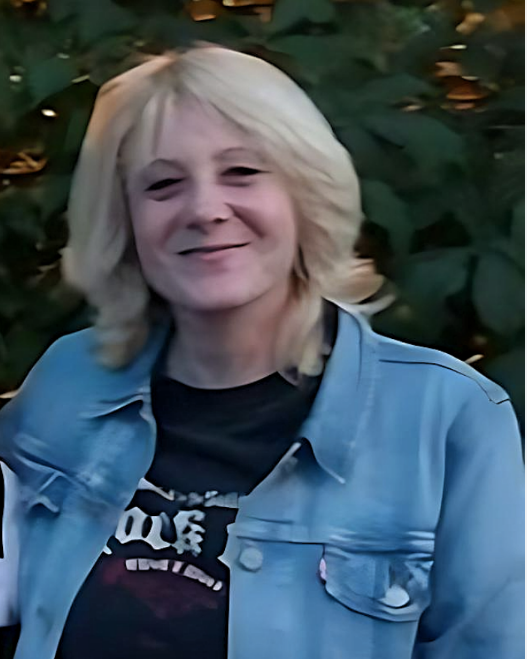
Writer/Podcaster
What do I say about myself? I love telling other people's stories, but hmmmm...Let me think.
When I think about my life, I have so many chapters. I am a very compartmentalized person.
I am first of all a mom of 5 kids. Yep...5!
I am a grandma to 5 beautiful children! All gingers lol.
I am a writer, author, podcaster, oh my gosh...I've been a journalist, columnist, hard news writer for print. I have actually won quite a few awards for my writing.
I am a photographer. I LOVE getting the money shot and capturing life! I do have a website called Spectrum Photography, but I have it offline more than on because I cannot figure out how to make the pictures work on Etsy lol. I'm not good at that kind of stuff.
I very much am an autistic individual, ADHD and dyslexic. Yep I got it all lol. I'm not that great a executive functioning, but I have many great ideas! I am trying to put things into fruition, but it just takes me longer and I probably make more mistakes, but I don' give up!!!
I have had many lives in the working world. I've worked in the jail system with helping women and talking with them, praying with them. I was the director of a battered woman's shelter/rape crisis center. I oversaw the crisis hotline at the center. I worked with abused boys. I was an Assistant Director at a school for kids with autism. I was a head swim coach for 12 years. Yep--former swimmer myself lol.
I was adopted. I've adopted 5 kids. And if you want to know the history of my crazy buffet of a family lol...I will tell you, but … Read More

Why Neurodivergent Children Shouldn't Have to Change Who They Are to Belong