
How To Help Kids Understand Dementia With Less Fear
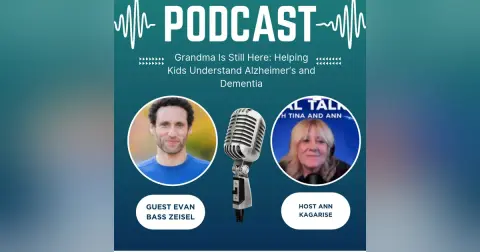

Send us Fan Mail Memory loss can feel like it steals the person you love while they are still sitting right in front of you. For Tina, that isn’t theoretical; her mom’s early onset Alzheimer’s has reshaped their whole family, including three kids with three very different memories of “grandma.” That’s why this conversation goes straight to what families actually need: language that helps children understand dementia without fear, and practical tools that make connection possible when the old ...

 Apple Podcasts

 Spotify

 Castro

 RSS Feed

 Amazon Music
Memory loss can feel like it steals the person you love while they are still sitting right in front of you. For Tina, that isn’t theoretical; her mom’s early onset Alzheimer’s has reshaped their whole family, including three kids with three very different memories of “grandma.” That’s why this conversation goes straight to what families actually need: language that helps children understand dementia without fear, and practical tools that make connection possible when the old rules no longer work.
We’re joined by Evan Bass Zeisel, an author, educator, and improv trained creator of the “How You Are To Me” approach. He shares what he learned from interactive theater with people living with dementia, and why a few small shifts can change everything. We talk about his book, How to Play with Grandma, late stage dementia communication, slowing down, listening for what’s trying to come through, and echoing back meaning even when speech is limited. We also dig into emotional memory, why music and familiar routines often stay accessible, and how “connect instead of correct” can lower stress for everyone in the room.
You’ll hear concrete strategies you can use right away: avoiding “Don’t you remember?”, validating feelings without reinforcing unsafe beliefs, offering two choices to reduce overwhelm, and “threading” conversations when stories jump or repeat. We also make space for the family side: grief that isn’t linear, kids who don’t want to visit because it hurts, and the quiet power of simply showing up with love.
If you’re navigating Alzheimer’s, dementia caregiving, or how to talk to kids about a grandparent with memory loss, this one is for you. Subscribe, share with a friend who needs it, and leave a review so more families can find these tools.
@Real Talk with Tina and Ann
00:22 - Why Dementia Affects Kids Too
01:44 - Explain Dementia As Change
04:08 - Improv And Interactive Theater Lessons
08:58 - A Family Living Early Onset Alzheimer’s
10:12 - Reaching Someone In Late Stage
18:55 - Talking To Kids Without Fear
22:35 - Connect Instead Of Correct
24:56 - Yes And Without Reinforcing Delusions
29:56 - Validation Plus Simple Choices
32:06 - Threading And Going With The Jump
33:45 - Repeated Stories And Memory Books
37:55 - Let Kids See The Big Feelings
44:09 - Grief, Love, And Change
49:20 - Building A Kid Friendly Tool Belt
53:44 - Resources And Where To Get Book
57:17 - Final Takeaways And Goodbye
Why Dementia Affects Kids Too
SPEAKER_01Welcome to Real Talk with Tina and Anne. I am Tina. And I am Anne. Well, today's conversation is incredibly personal for me because Alzheimer's and dementia don't just affect the person whose brain is changing, they affect the entire family, including the children who are watching someone they love change. A child may not understand why grandma suddenly doesn't remember their name, tells the same story over and over, or sometimes doesn't seem like the grandma they remember. And while we're trying to care for the person with dementia, we can forget that our kids are trying to make sense of it too. So how do we help them understand what's happening without making them afraid? And how do we teach them that there are still ways to connect? Our guest today is Evan Bass Zeisel, an author and educator who uses creativity and the arts to help people meaningfully connect with those living with dementia. He created the how you are to me approach, and his background is improvisation, has helped shape many of the techniques he teaches, meeting someone where they are rather than constantly trying to pull them back into our reality. His children's book, How to Play with a Grandma, takes those ideas and makes them understandable and practical for children and families. Evan, welcome to Real Talk with Tina and Ann.
SPEAKER_00Thank you for having me. That's my pleasure.
SPEAKER_02Yeah, I really loved your book. And we're just going to get into it.
Explain Dementia As Change
SPEAKER_02Your book is very simple for kids and parents to understand with great tools in the back. So, how do we explain Alzheimer's and dementia to a child in a very simple way?
SPEAKER_00I mean, I think truthfully it's how we explain it to adults as well. I feel like simpler is better. And I think the biggest hurdle we often run into is we as a culture, a society, see somebody who has something like dementia or Alzheimer's and say, okay, oh no, they're sick, they're lost, this is something scary, instead of the reality that, you know, different dimensions and Alzheimer's affect the brain in different ways. And it changes essentially how someone can process certain information. And really, that person is just the way that they can process things is different. And we just have to change our approach to how we interact with them to get to sort of who they are and make it easier for them to actually respond based on sort of the changes that they're going through. And it and it's almost like I mean, I've got I've got a four-year-old and a one and a half year old, and like they are constantly going through changes, and we are constantly going, okay, here's here's the change in how we need to talk to them or approach. But with kids, we're like, oh, that's natural. But if it happens when somebody's older, for some reason, we lock up and and we sort of have this uh despair kind of model instead of they're just changing.
SPEAKER_01I love the way you put that because um my mom has early onset Alzheimer's. We are in year six, she will be 66 years old this year, and it has killed me. It it has absolutely wrecked me because the change has happened so fast. So my family is living this every day. And I love how you're talking about um thinking of it as as a change, not not something that you look forward to because I I don't know that you can ever do that. But um, you know, you've you've got me you've got me thinking about that. I think for me, it's a little easier to think of my three boys changing as they grow because it seems more positive. Uh and like that's what your that's what our job is as parents. Uh, but but you've really given me something to think about. So I I did want to ask you, I'm curious what made you write this book. I feel like it must have touched you personally.
Improv And Interactive Theater Lessons
SPEAKER_00Yeah, I um I I sort of come from a family uh that is in the the dementia sphere. My father um has worked uh with uh Alzheimer's in um sociological approaches and things like that. So I grew up with it. And then in, I believe it was 2011, I joined uh a National Institutes of Health, the National Institute of Aging clinical trial, studying the effect of interactive theater on the dementia population. And so spent a number of years uh developing interactive plays, testing them, and then creating training for non-performers to be able to put these plays on in dementia uh facilities. Uh and it was really eye-opening to me working on that, uh, both because one of the, I guess, benefits we had is every time we went to do a show, we had no idea what level of dementia an individual had in the audience. And the the shows were designed where there were two performers and the audience was in the round and they all had uh dementia at different levels. And we cast them as performers in the play and they interacted with us, but the play was semi-scripted so that whatever they said worked with the improv, yes, and and it would created a safe space where essentially what they weren't used to was being able to say something and it work and not be, you know, corrected or told, oh, that's wrong. And so we created this environment and to see their interactions and then talk to either their children afterwards or the staff, going, Oh, you know, this person hasn't talked in a month, and like they were chatting with you, or this person usually is very aggressive. But it's really interesting that when they were aggressive, you made that part of their character. And then it was clear that because everybody was supporting them and finding it amusing, they leaned into it and they actually were having fun. And we were just like, oh, well, we didn't know. We just assumed they could do it. And that it was amazing the small tweaks, even there, on how being open and sort of adjusting our point of view can affect um the quality of life for these individuals. And and then from there, I realized the good talent or the superhero talent that I have is I come from the arts background. And so I can approach it from that perspective, which is slightly different from how a lot of people have approached it in the past. And I can sort of lean into art as a means to both educate, but also sort of tell stories. And so I wrote and produced a short film uh called How You Are to Me, which integrates in sort of improv technique that I learned was really helpful. But it's it's really just a short film about um a caregiver and her husband, uh told in a sort of unique way. And it's it's an ode to the caregiver. Um Tina, as you'll know, it it is exhausting. It is a lot of work. Even when you're doing everything right, it is just 24-7, 365. And so I wanted to highlight that it's not just, you know, as you said, the the individuals who are affected, but you know, this their circle, their family, the people who support them. And then also in there, I could inter interweave techniques that I learned that they could see people could see on screen and go, oh, look, like that's interesting. I don't do that, but what if I try that? Um, and I use that sort of as a board to or foundation to then do um sort of teak classes on that and teach using film as a reference. Uh and then I have, as I mentioned, uh two daughters now. And as um my youngest daughter got into reading and she loves books, uh, I realized the sort of beautiful nature of children's picture books. And sort of the analogy I've I've come to recently is they're very similar to stained glass windows on churches, which were designed for people who couldn't read to understand the stories of you know this religion, and that children's picture books are this beautiful balance of the images that are happening, and then usually simple text, because even as children are learning to read, it needs to be simple. And so it it sort of whittles the information down to as simple a way you can express it as possible. It just motivated me to want to get involved and do this. And I um applied for a small grant um and got that to sort of help write this book, which helped uh fund the ill the illustrator, uh Danny Lupovici, who's amazing. Just shout out to her.
SPEAKER_01Well, that's really fantastic.
A Family Living Early Onset Alzheimer’s
SPEAKER_01So, you know, as we're living this, my children are now 13, 10, and six. And so they have varying levels of knowing grandma. And my oldest remembers her like I do. And so I think it's hardest for he and I because we know who she was and who she used to be. My middle doesn't necessarily remember, which makes me sad. Uh, he just has here and there, oh, I think I remember that about grandma. And then my youngest only knows grandma with her Alzheimer's. And seeing each of them differently interact with her really brings a little bit of joy in what otherwise is very, very hard. And uh, you know, shout out to my dad who takes care of my mom. He is the full-time caretaker, caregiver. And uh, you know, I I step in once or twice a week and it's still hard all these years later. She's in the late stage now uh where she is immobile. And um that's that's been tough. And so I I do want to ask you a few questions about the book, but first I was hoping maybe I could, you know, ask you in the late stage.
Reaching Someone In Late Stage
SPEAKER_01I I I'm actually finding uh maybe I need to back up for a moment. I guess uh what I wish I could have done when my mom was diagnosed at 59, but it was impossible is kind of hold off on my grief. I wish I could have um saved it for maybe now when there is no communication. She isn't capable. I I I I hate to say it, it's just true. She she can't do anything. Now there's a feeling between us that I still feel, and sometimes I can see you know that love in her eyes.
SPEAKER_00But does she try I I have some questions? Yeah. That's okay. Yeah. So does she try and respond? And it's just you can't understand it, or when you speak to her, there's no response.
SPEAKER_0190% of the time, no response. On a few occasions, it'll be something like this, uh, and nothing comes out. And so we'll we'll we'll try to finish what we think she might have been trying to say.
SPEAKER_03Yeah, yeah, yeah.
SPEAKER_01At this point, um, but sometimes you can really just you can just feel it. Like I know my mom loves me. I know she knows who I am, even though she can't say my name, I know she knows who I am. I don't think that love will ever go away. Um, but I'm wondering with all of the things that you do before I ask you about um explaining a little bit more about your book, I I'm just wondering in this late stage, you know, I I my questions that I have now are in the before this happens, and then the one you're in the late stage. Do you find through anything of your improvisation, anything that that you were just mentioning, that even can somehow get through even in that late stage when speech and mobility are severely impaired?
SPEAKER_00Yeah, I mean, I think you've already touched on one of the big things, especially with uh diminished um ability to verbalize things, is your guys are trying to echo the you know what she's saying, right? Because she is trying to say something. And oftentimes when they get to the late stage and it does get to the verbal issues, they are having a hard time processing the way to speak, right? Um, but it's not that they don't have these thoughts, right? And I think one, I think you're doing a great job with understanding that even though she can't say your name, it doesn't mean she doesn't know you. I think a lot of times, even with the earlier stages of dementia, uh, Alzheimer's, when somebody can't remember a name, people are like, oh, they don't know who I am. And my response to that is always like, when they give you a hug hello and they give you a hug goodbye, it's not a hug that they're giving to somebody they don't know. It is very clear that they recognize you as that loved one. They just can't verbalize it. When we have issues of finding a word and it's on the tip of our tongue, it's not that we don't know what that item is. It's just we're having a hard time finding that word at the moment. And then five minutes later we find it, but it's not like we didn't know what that was. And I think that's a big thing that you've already said you you recognize, and I think is really important. So of techniques, oftentimes uh slowing down and listening and being okay trying to, you know, listen to if she is verbalizing that 10% of the time, to just not try and rush it and then echo back, okay. I think this is what, you know, it's looping if we're talking for you know conflict resolution. This is what I think you're trying to say. And you can, you know, say that and do simple things, and sometimes they can nod back, or you know, you'll get a squeeze in the hand. So it'll be different things that are sort of a a positive acknowledgement of what you're saying because they can't verbalize. Um, but taking that time, and sometimes it takes a long time, so it depends on your you know availability, but taking that time can also be really meaningful to them because they are struggling, but it's they're trying to have that communication. Uh, so I think that's really important. The other thing with the later stages is um an idea of believing that they can until they prove to you that they can't. And what I mean by that is oftentimes caregivers in a desire to help, we we say, oh, well, we don't want them to be bothered by this, so I'm gonna do it for them. And then the more you do something for somebody, it sort of becomes a learned helplessness. They're like, okay, well, I'm not gonna try and do this because they're just gonna take this away from me. And so seeing in the environment if there's anything that she can do for herself that she may want to, and allowing her to try to do that and you know, assisting, um, especially as you said, she's immobile in the later stages. Uh, but sort of going on that belief can can change things in little ways that will be really meaningful for her. Um, I know we we had a couple of uh the scripted improv performances and we went in, we didn't know, and we had one person in was on sort of laying down and was it was essentially a mobile, very low verbal, and we just slowed down and we listened and we echoed, and it allowed her to be involved in the show. I mean, you know, it's it's the levels uh that they are capable of. And so when they can do a little bit, it is very meaningful. We had another performance where somebody was was swimming in a swimming pool and they were just moving their neck like this, and we were like, okay, well, like that's a little bit of interaction. Later we found out um they were paralyzed from the neck down. That was full interaction from them. And and you know, the staff was like, Oh my God, that's like the first time, you know, somebody has invited them in and this. And it's it's amazing how much that can mean to them, but also being able to see their, you know, joy or quality of life or things like that. And sometimes you'll get a tear in their eye and it won't be a sad tear, it'll be a happy tear. It's, you know, um, we've like run into that and we're like, oh, maybe we did something wrong. And then afterwards, it's like, no, no, no, they were having so much fun, their emotions overwhelm them. That I think taking that time and those little things can be a lot. Um, additionally, if you do echo the looping back and she does communicate something and you're with a bigger group, you can amplify it. You can sort of tell the rest of the group what she's saying or trying to communicate, and then she'll feel involved with that group. And so that's sort of again expanding out her ability to feel included.
SPEAKER_01I gotta tell you, Evan, something really funny. You know, as hard as it is for my mom to be able to say anything, this happens every single time my husband is around. Okay. My husband will walk up to her, grab her hands, and say, I love you. And she, darn it, if she doesn't say I love you back to him every single time. And my dad and I and my kids look at each other like we're doing all the work over here. And she always says, I love you to my husband. It is, you know, and and I chalk this up too. My mom loved, well, I'm gonna say my mom loves my husband. Okay. They always had such a fun, uh, just kind of like a um, like almost like a prank relationship, if you will. You know, they could just joke around with each other. And so we all fight over, are you kidding me? So then we're all in mom's face. Mom, I love you, grandma, I love you, honey, I love you. And we get sometimes we get smiles, sometimes we get the blank stare, and then we just glare at my husband like, you have got to be kidding me. And he's just all you know, just happy as can be.
SPEAKER_00For all you know, her not responding is her in on the joke because she likes your reaction, you know?
SPEAKER_01It's that's great. That's a great way to put it.
SPEAKER_00And I think I think I love that. Yeah. The other big thing to remember is though sort of the processing is affected, the semantic memories, the emotional associations we have, and that's why like the arts sticks around. You've got, you know, uh documentaries, what is it, alive inside, where they listen to music and it you know, brings them out of of things. That the things that they've have emotional associations with or things that they've done for years and years. So if like, you know, they always said I love you, or things like that, like it comes a little easier. Um it's it stays, it's still there. You know, their personality, if you know, if they like to prank or kind of do jokes, that's still there. It just comes out slightly in different ways depending on, you know, the verbalization levels and things like that. But like remembering that even in these late stages, I know because you were talking about grief, she is still there, just different ways of communicating and certain things, because of the how the brain is processing, will be harder for her to understand.
SPEAKER_01Yeah, definitely.
Talking To Kids Without Fear
SPEAKER_01Well, wanted to ask you then, um, if if you can, in your words, explain um for children who are experiencing this with a loved one, whether it's a a grandparent or someone else, how do we explain what's happening in a way that a child can understand without teaching them to be afraid of grandma? I know what we have done, but I'd love to hear from you.
SPEAKER_00Yeah. And I think this is sort of one of the things I tried to focus on in the book. And I didn't realize this, but uh somebody pointed out to me that technically I don't mention Alzheimer's in the book or dementia. It just exists. And I think one thing that is amazing about kids, and I think we can learn from them, is they meet a new friend and they're like, let's go play. And it doesn't matter who that friend is, and they'll like make up a game together. Uh and you know, my daughters are like, okay, we're gonna go into the cave and there's a monster out here, but it's a good monster because I don't want to be afraid. And, you know, and they're like, cool, let's do this. And I think that natural ability makes it actually easier for them oftentimes to interact, as long as parents aren't creating a stigma around it as like something to be afraid of. So I I would just sort of describe it as grandma is going through some changes and it affects how she can interact with us. And sometimes she can do more and sometimes she can do less. Um, but she's, you know, her per she is still who she is, uh, but sometimes it just has trouble understanding something. So you might need to speak a little slower or take your time. Um, but she always loves you and always wants to play and have fun with you. So, you know, just listen and be aware. And, you know, if she's having a hard time, maybe go a little easy on her.
SPEAKER_01Yeah. We uh we've told our boys that uh we've described it as grandma's brain is shrinking because that's what's happening. Um, her, she you'll always be able to feel that love with her between you and her, even if she can't tell you how she feels. And we're gonna just love her through wherever she's at right now. And they have done such a good job with that. I I couldn't be more proud of my boys, especially my youngest. Do you want to talk about the sweetest helper? He would melt your heart. I wish the whole world could see him just instinctually help with my mom. He is one of a kind. And uh as sad as I am that this has been stolen from us, you know, a life that we thought was gonna look so different. And she would have enjoyed um all of her grandkids so, so, so much more than she got to. Uh, seeing my youngest with her is something that uh he will be a helper one day, some way, somehow. He was born for something like this to help in some way and really impact lives. Um, you know, we always say, we'll remember for her. We'll remember, you know, for grandma. And I say, just talk to her, even if she can't talk. Just tell her about your day. You know, she'll still hear you. Tell her, you know, it's funny, it's I think hardest for my middle son who's 10. Um he can talk all the time, like all the time. But then around grandma, it's I think he wants that interaction. And so it's hard for him.
SPEAKER_00Is there something that they used to do together or talk about all the time?
SPEAKER_01They used to play games together. Yeah, but she's unable to. But we keep her around us when we're playing. Yeah.
SPEAKER_00I mean, I think if you are playing games and she can see and uh you sort of uh include her by explaining what's happening, uh you'd be surprised at how uh that changes the interaction.
SPEAKER_01Fantastic.
Connect Instead Of Correct
SPEAKER_01Evan wanna ask you your book talks about skills that kids can learn to do. And one thing you say is don't quiz them and don't say things like, Don't you remember? So tell me why we shouldn't say that. I have caught myself so many times saying, Hey, mom, in in the earlier stages, hey, remember when? And then I'm like, No.
SPEAKER_00So the the easy the easy response to that is they don't remember, because that's how unfortunately the brain affects things. So what is the advantage of saying that phrase? Like, don't you remember? Or that's not right. It's not going to help them remember because they they can't, just because of the way you know the brain is processing things. So the question is if the end goal is to improve quality of life, improve your interaction with them, uh everything that we do should sort of lean into that. And I think the don't you remember or oh that's not right comes from our desire and and understandably a strong desire for them not to have changed, but they did change. And and so us trying to bring them back and say, okay, if I can get you to remember, then you won't have Alzheimer's. Unfortunately, at least science has not gotten us there yet. Um and so it's really us clinging to the belief that we can pull them back in a different direction. And once we realize that's not possible, we just need to adjust, you'll be surprised that you just don't bring it up because there's no there's no benefit to it.
SPEAKER_01Right. I read something early on that was so helpful that said, you know, it was from a husband whose wife had gone through this disease and she had passed away. And he said, My biggest piece of advice would be just be with them in the moment that they're in, live in their world. And that was something that for the most part, I think I did great with, but there were some things I just couldn't go along with when hallucinations were happening or made up stories that I knew were not true and they were not good ones. I had to just steer it in a different direction. I I couldn't choose to live there.
SPEAKER_00Yes,
Yes And Without Reinforcing Delusions
SPEAKER_00yes. And I and I think that is a great point that I think I always think of fallback on improv. Everybody who's like sees improv shows, they're like, oh, it's just yes and it's so easy. Improv is like hundreds and hundreds of rules, and you need to understand them well enough so you know when you can break them for them to still work. And I think it's just that there's nuance in things. And I think the sort of yes and going along with their world doesn't mean whatever they say is the new reality. It's more you can, as you said, uh go along and then guide it, right, to something safer. And you just are not pushing against the flow, right? Um, I think oftentimes, you know, somebody's, oh, I have to, you know, they have a hallucination. And uh, for listeners, that doesn't mean they're on shrooms or anything like that. It's more uh they more like AI. Uh they believe something is true that is not actually true and is happening to them. Um, I oftentimes it's uh I have to pick up a younger sibling from school, but that sibling either has passed away or is much older and not at school, but they're like, oh, I'm I'm afraid that I if I don't pick them up, that they're gonna be left there, they're gonna be scared. And the thing that I always try and say to think about is though the hallucination isn't real, the feelings that they are having about the situation because they believe it's real are real. And the thing that you are yes anding is not necessarily the hallucination. You're you are joining them in acknowledging that their fear, their anxiety, that their experience is real. And once you acknowledge that, you can then guide it to something else. But saying, Oh, your brother doesn't need to get picked up, so you are afraid for no reason. I mean, you say that to anybody who's afraid and they're gonna, you know, not uh respond well, regardless of having Alzheimer's or not, that I think it's really that's the aspect of joining them. And I think we all in any time when we are, you know, are anxious or afraid, having that acknowledgement, having people acknowledge that does go a long way. And that I think when people hear, oh, just you know, go along with the situation, they think, oh, am I supposed to just like whatever they make up or whatever they're believing, I have to go do. That's not necessarily the case. There are certain certain situations where it makes it easier to guide. Um, one example when I was volunteering at a dementia facility and I was with a woman and she was like, Oh, I have to go, I'm leaving now. I have to go home. So I'm gonna, you know, and the yes and to that is, okay, well, like you, you probably want to get your coat or some clothes and maybe some packs, some stuff. Let's go to your room and do that. And so we went to her room and then we got to her room, and then there was a picture of her singing um on, you know, nearby. And she was like, Oh, well, I used to be a singer, you know, would you like me to sing you a song? And I was like, Oh, that'd be lovely. And then she sang this beautiful song because she used to be a professional singer, apparently. And then the song was over and we talked about the song. It was wonderful. And then she said, Well, okay, we want to go somewhere else. And she had already forgotten about leaving. And so saying, Okay, let's help with your anxiety right now, not even calling it out, but saying, Okay, you have a fear, this is our anxiety, let's lean into that. The hallucinations also often are very short-lived too, and um can can easily be guided unless you push against it, unless you're saying, well, no, you're not going home. You have to stay here. And now all they hear is I'm trapping you, which nobody wants to hear.
SPEAKER_01Evan, you talk about needing to validate. Can you tell us how we do that?
SPEAKER_00Yeah, yeah. I think uh so validate validation and acknowledgement. In the example we were just sort of talking about, right? Um, acknowledging is sort of calling out that it's it exists, and then validating is saying that that is okay, right? That it is if they were anxious or having a, you know, afraid of something, to say that is a justifiable thing that happened, you know, uh in the book. Lizzie is the name of the girl. We don't give her a name, but that's our her name. And um, she says to her mom her grandmother, you know, yeah, when I like when I'm get anxious and things, it's like it is it is scary. And to say it like a sort of validate that the emotion is an okay thing to have and not to deny it and say you shouldn't be having this goes hand in hand with the acknowledgement. And there it therefore is that yes anding of feelings are okay to have and that the feeling is legitimate, even though it might be linked with something in their head that is not an actual reality that's happening.
SPEAKER_02You had so many really great skills in there for us to do, and I think it's really great for kids to be able to watch us do it.
Validation Plus Simple Choices
SPEAKER_02Uh, I love how you break down how difficult choice can be for somebody with dementia or Alzheimer's. And that two choices thing, you know, I I I do that for my kids all the time. Yeah, I I actually think that this works for anyone with neuro differences, but how does it help to just give them two choices instead of what do you want for lunch?
SPEAKER_00Yeah, yeah. So uh this concept of binary questions, binary being two. Um, and and the idea is uh leaning into this belief of always offering somebody uh genuine choice and control. Um, ever since we've become an adult, we have that over our lives. We get to choose what we want. Um, so when somebody has Alzheimer's or dementia, removing that from them, saying, I'm gonna give you this, does not end well. So so leaning into giving them choice, but also with the understanding that as Alzheimer's affects the brain, it affects the higher level processing. Um, and so being able to break down complex tasks is more difficult. And we don't think about this, but when somebody says, What would you like for lunch? there's a lot of things going on. And with Alzheimer's, it's hard to do. So the idea of the binary question, you you ask a question, but by giving two options, you are giving them the genuine choice and control of what they want, while also on the caregiver side, ensuring that you're giving them something that you actually can provide so that you're avoiding that conflict or that tension ahead of time. And this is, you know, probably what you said you do with your kids is like, I do this is this is what we have for dinner. I've got the, you know, these things. Unfortunately, my daughter now knows that. And she goes, I want options if I just offer her one thing now. And I'm like, okay, let me bring the options. But it's but it gives you, as a caregiver, the control over being able to not have to make something that is complex or hard for you to do while also making sure it doesn't cause conflict by pushing something upon them.
Threading And Going With The Jump
SPEAKER_01What is threading? You talk about threading.
SPEAKER_00Threading is sort of going along with the story. And and with individuals with dementia, sometimes they're talking about something and then they just jump to something else in the middle of what they're talking about and continue to talk. And it's their story is jumping. And I would, this is sort of my belief, but in my my belief is in their head, they sort of have an A to C. It was this, and then that made that triggered something in their brain to think about the B. And then that B triggered something else in the brain to think about C. And A to C is might be far apart, but they just in the middle of the conversation jumped to that next thing. And many people's instinct is to go, oh, uh no, you were talking about this. Let's get back to that. Um, that's not where their brain is. So threading is the idea of going along with wherever they jump to, um, and realizing that can still be an interesting conversation. And when you're doing those kind of conversations, to just go with it.
SPEAKER_02Well, you just described my son with ADHD. Um, I mean his brain literally, he will just jump from thing to thing to thing, and it's it's kind of fun. Um, but yeah, sometimes you just have to get on the ride.
SPEAKER_00Yeah. And sometimes you'll be on the ride and they'll jump back to the original thing because their tangent just was to go off on something, and then that triggers them to come back. Right. And you'd be amazed and you're like, oh, okay, we're back here. Great.
SPEAKER_02What should you do with it if a child is having a conversation with their grandparent or person with dementia?
Repeated Stories And Memory Books
SPEAKER_02And the story just happens over and over again. I mean, like, it's the hundredth time they've told that story. What should we do?
SPEAKER_00So I highlight that in my short film, and I wrote it into my short film because when I was a different day when I was volunteering at a dementia facility, I talked to this gentleman and he was so lovely. And he told me about the first time he met his wife and then gave me advice on love about 50 or 60 times during the course of I think me sitting with him for lunch. And each time it was the most beautiful story, and he was so emotionally involved. And um, but that said, from the caregiving side, it is difficult because you are hearing the same thing over and over again. Now, how to talk to a child about that? I would I'll give the general perspective. I think it's like it comes from it comes from them wanting to have interactions. And oftentimes it comes from them telling a story and getting a positive response. And then internally they go, When I do this, people smile back at me. So I'm not doing something wrong. And so therefore, I'm going to repeat it, or it just sort of triggers in their their you know, mind-body kind of connection the positive reward for it. So then they they do it, but they don't recognize that they've already told that story. What I I tend to do, and I don't know if this is the right approach, but I find it is helpful, is yes and that. That is amazing. And then now I'm going to add to that by telling you a little bit of a story about something else or guide it into something related that we could continue to talk about it, but now we're going in a different direction. So they see a positive response, but not having to repeat the same thing.
SPEAKER_01I feel like it's it's almost like a choose your own ending to one of those types of books when, yeah, you know, I actually miss those times where my mom would repeat because it's been so long since I've really heard her talk, you know, talk, talk. And uh yeah, it it just it it's taken me back to those choose your own ending books where, okay, maybe you're reading the same thing and then you're picking, okay, well, we're gonna add to this or we're gonna ask you a question and maybe it prompts this. And uh yeah, it's that that was never a struggle for me, thankfully. I I was, you know, very patient in in that regard. I I think it's actually this stage where I don't know how to interact with mom and wishing that I could have interacted more with her and and pushed that grief aside earlier. But you know, it a diagnosis like that hits you hard. And when you love someone, you just can't help it.
SPEAKER_00And I I would also say, depending Anna on uh how the it gets repeated, one other tool you can use are memory books. So it is super subtle in this children's book. Literally on the table in the living room, you see the side of a book, and that is actually a memory book. So I could talk about them uh at things like this. Uh and so memory books are sort of books you put together that have large pictures related to the individual, usually things of emotional moments. So if it was a wedding or it was a birth or their favorite restaurant that they went to every other week or something like that. And then you put um in big letters underneath a very simple sentence of like describing what it is, and that can be used as a means to adjust the conversation, or even if there's a repeated item, but it's linked to something that there's a picture of, you can bring out the book, you can say, Oh, you know, we have this book of things, you know, things from your life. This one here is blah, blah, blah that you were just kind of talking about. I noticed this about the picture. And then it adjusts the picture, the conversation to talk about it. And because you've got the sentence that sort of primes what it's related to. And if you can choose a picture that relates to something that was emotionally meaningful, oftentimes that will be easier for them to connect with.
Let Kids See The Big Feelings
SPEAKER_02You know, going back to kids for a second, now we have to let our kids see us have all the feels. I mean, we want them to have all the feels. So we want them to know that it's healthy to have all the feels. What do you say about them seeing the adults in the room being sad and mad and scared and frustrated? What do you think about that?
SPEAKER_00I mean, I think it's good. I mean, I think I think repressing feelings for anybody just is teaching the next generation to repress their feelings. And I think I don't know, the things I've learned over my life is the times when I'm having hard times talking to somebody else and saying, like, this is really rough, like has opened up the conversation for them to say, like, oh, well, I've had something similar, or like, yeah, I can understand, or like, well, that I didn't happen, but this did, or do you want me just to listen? Right. I mean, there's the my wife and I talk about this one, but there's the like, when somebody's talking and it's something that is hard for them, you know, we can say, uh, do you want to be help, hugged, or heard as opening up for what response would be the most helpful for you? Because sometimes you just want to express it. And sometimes you you need a hug, and sometimes you need some advice. And sometimes we give advice when they just want to be heard. And and so it's an easy way there to uh open that up and say, okay, we can do this. But I think showing emotions is a positive thing for the younger generation. I mean, they definitely show them to us. Uh, and and I think it also uh can potentially help them process when they get overwhelmed. I know my four-year-old is at the stage where she sometimes gets overwhelmed with emotions and she's like a tantrum. And it's really just like, okay, how do you process that? And I think the more we can remove the stigma that when we're sad, we shouldn't cry, like I think the better. Because I think it also, it also comes out of love. I mean, in these situations, right? When you are sad, when you know, when you're crying, it's it's because you love the person so much that it is overwhelming you. Um and and the more we can talk about that to our kids, I think the better. I'm a big proponent of like not not treat them like adults, but don't don't infantilize. Um, like we, you know, it's we talk about that with the older generation as well. Don't infantilize, like don't, and sometimes when we try to protect them, we're really just hiding stuff that would be helpful for them.
SPEAKER_01I think it's our job as as parents to teach them how to handle these big emotions. Because personally, I think that when people don't know how to handle emotions, it can lead them down a path of bad choices uh sometimes. So we absolutely preach here. We need to feel it to heal it. We could be happy about this and sad about this at the same time. And that is just what life is all about living with uh either one emotion, multiple emotions. They could be similar, they can be different, can be a whole mixed bag all at once, and that is okay. It is quote normal, if we want to use that word. And uh I think it's our job to kind of really help them through that and model it too. You know, my kids have seen me upset, my kids have seen me cry over this, my kids have seen me love my mom. They have seen me love, love, love her and make sacrifices. And I'm not saying that, like, look at me. I'm just saying that my I just as hard as it is, I'm doing the hard things because I need them to see that it can be done and how to do it.
SPEAKER_00And and I would say this is a I don't know, this metaphor just came to mind, but like you don't you get rainbows because it's raining and you have the sun, but without the rain, you don't get a rainbow.
SPEAKER_02Right. Yeah, so true. I love that, Tina, that they see you doing the hard things. I love that. And you know, your kids, you tell me stories sometimes, and your kids step up all the time. I don't even know if this is true, but I wanted to talk for you, Tina. I didn't know if this was true, but I know that uh sometimes kid maybe kids just don't want to go because it's hard. They don't want to see grandma like that, you know? So I mean, what do we say if they're if they get to the point where they're just like, I just can't go anymore?
SPEAKER_01So, so for us, we uh my youngest has never felt that way. In fact, my youngest is the one who really gets all of us uh okay with. I don't want to say excited, that just you know, it's it's it's hard. It's it's not exciting, but it it's a it's uh a loving thing that that we get to do for my mom and the stage. And so he always is wanting to go over there because he helping, serving, that's his heart. For my middle, sometimes he can be like, I don't know if I want to go today. And I just say, I know, I know it's hard. We're gonna go as a family, we can do hard things. And he comes along. My oldest knows, I think my oldest who's a teenager knows I better not say anything to my mom at this point because she's really been through a lot with this. Like he knows, you know, he's old enough and mature enough to know that this has really taken a toll on me over the years. So he just goes along and he does what he can. And the the coolest thing, and I I my kids, they're great, you know, not perfect, but they're great. They both learn from their youngest brother. And I think that's really special about the situation that we're in. Wish we weren't in it, but since we are, that is something that they they follow our youngest's lead.
SPEAKER_00And and if I could add to it, I think there are also additional approaches that can be helpful. I think uh, you know, we've just talked about being honest with our emotions and feelings in front of them. And I think being honest and saying, you know, it is it is hard for me too. And your support is really helpful for me, that you being there has helped me so much and acknowledging the thing that they have added is also showing them that even just being there for somebody can really be a big support. presence. And so then it you know it's giving them the value that they may not have been aware of that they've been adding.
SPEAKER_01Absolutely. Absolutely.
Grief, Love, And Change
SPEAKER_01Well this is a hard one. Uh and and for I think that I don't think grief is linear by any stretch. And so it kind of like a roller coaster is how I always describe it. And how I say for myself personally is that um over these last six years as we continue to go through grief and joy, uh I call it healing pieces to my puzzle. So there will be, you know, this little piece and I'm like I I think my puzzle's like a million point two pieces or something like that. And I'm like nowhere near having the puzzle finished. But there's always like a little piece here and there that just kind of mends my heart just a little bit back together. So how do we explain grief and change to our kids or how how do how do maybe you do it or you know do you talk about it in the book? Because grief is hard and change can be too but one of my favorite quotes ever that literally changed my life when I was in college, I saw walking to class one day it was on a church sign and it said when you're fearful of change, think of the beauty of autumn. And for me to remember that all these years later says something and I always think of it as we're in the change of seasons right now that change can be beautiful.
SPEAKER_00Change sort of the the ending thought in the book is uh there are amazing things on the other side of yes, which is a nod to uh improv perspective. Um oftentimes in improv you're taught don't talk about the thing, just do the thing because it's scary to take that leap and do the thing because you don't know what's going to happen. But more times than not, actually just taking that leap ends up with an amazing result for you know for the show or whatever. But but I think equally so it's the um the Babe Ruth quote is always in my head but I I'm gonna I'm gonna botch it. But it's something along the lines of like you know the biggest fear is the the fear of striking out but if you don't step up to the plate like you never get to swing. And that the the fear of just having to do the thing is often a you know a bigger a bigger hurdle for us. I think uh there's a book um why zebras don't get ulcers by uh Zapolsky. It's a like a psychology book I had to read in college that I never forgot. But it was essentially humans are the only sort of or one of the few uh sort of animals uh that can cause ulcers and physical damage to our body based on stress that we get from thinking about something that might or might not happen, but worrying about what might happen. And that other animals the fight or flight kicks in they run away from the lion it's over they stop thinking about it their bodies are fine. But we have metacognition and we overthink things and oftentimes the biggest issue with change is our worry that change will bring something that we don't like and and I think just realizing more times than not change is often good for us. It just it's not easy. But um having that conversation that things are always constantly changing. You know people kids they go to a a different grade each year and sometimes there are different kids there and they're have a different teacher and they're learning. Every time we wake up in the morning it's a different day that we're not getting the same breakfast that it you know it there's change everywhere around us and only when we define something as like a change we're worried about do we actually we think about it. So many things change and that you know grandma or grandpa you know is changing but it doesn't necessarily mean we've lost them it doesn't necessarily mean you can't still have fun with them. It just means we have to adjust because they've changed and and then when it comes to grief it's a it's interesting for you so you you think about that quote I have very odd reference but the one I always fall back on is uh Star Trek The Next Generation. There's an episode where uh somebody passes away and Data who's the android is trying to understand how everybody's grief that is going on. And there's one line at the end and he says like I don't understand why everybody is sad for this person who passed away because they aren't here anymore. So they don't feel bad. And the person responds we're not sad for that person. We're sad for the loss of that person in our lives and all of us having that loss and realizing that grief, the foundation of grief is just love for that person. That if you didn't love that person, you wouldn't have any grief. And and so I think when that time comes with my daughter that is sort of one of the approaches I I'm plan on taking is uh that grief is when we are sad for things that we love that we don't get to have around us anymore. And and sort of to focus on that love
Building A Kid Friendly Tool Belt
SPEAKER_00side.
SPEAKER_01Yeah grief is the price we pay for love.
SPEAKER_00I've I've read that uh before quote too well could we go into could we go into and kind of uh wrap up some of the skills that kids maybe can carry with them uh that maybe are in the book like naming the feeling asking questions telling a trusted adult things um yeah uh so the back of the book has um exercises that kids can go through and do with a parent um and it sort of explains them and then it has questions related to like what it means and exercises they can do um and that's sort of a a initially I designed that actually for like social workers or sta nurses or adults and then I found out that kids really enjoy doing it with their parents and I was like oh that's amazing because then they can you know see um what's going around them. I would say definitely I mean asking questions of adults is always I think a positive and helpful thing. I think that's part of our job is like we've experienced it. So passing on what we've learned and and hopefully one of the designs of this book is for the adults to sort of learn from reading it to the kids so that then they know okay welcoming questions about what's going on allows the avoidance of a stigma related to it, allows them to go, okay, um I can ask questions and also okay for a parent to not have all the answers and it's okay to admit that you don't have all the answers that I think progressively can be can be helpful.
SPEAKER_02You know there's so much helplessness I think with this disease for people that are watching it. And I think that our feeling automatically is to think I need to help I need to fix them. So how do we do that? How can we remember the person and and as the disease is progressing and everything and and help the child realize that you know we really can't fix this and that's okay.
SPEAKER_00Yeah I think it it ties with a number of things. I think the first one I always fall back on is empathy. So in in the sense of if I was going through this, what would I want? And being able to if the child's old enough to sort of have that conversation you know okay if you were having a hard time would you like to have choice? You know like would you like to have options? Oh you would okay so now let's think about them in that situation. I have one part in the book it's you know uh the child's playing a game with with the grandmother and the grandmother is like I don't want to play anymore and instead of fighting back it's okay what if I was in her shoes? We sort of have a playful image related to it. But if that's the empathy side of like well if I was there okay how would how would I like to be treated? And um I think that's a a really great way to sort of start that side of the conversation on the not having control there's the what is that the serenity prayer is is the one the easy one to fall back on. But I think that might be a little complex for kids but I think it's sort of the the concept behind it some things we have control over in life oftentimes it's the things that we get to choose ourselves. And then a lot of the stuff we just don't have control over and you know we we ride with it. If you're if you're on a canoe on a river you may want to go in a certain direction but if the river's flowing one way we just go with that. And that um it's not that we might not want to go in the other direction. It's just that's how life is and that uh seeing the different things around us that we do have control and we don't can be empowering because then you can also say grandma doesn't have control over this but we have control over how we interact with her. How can we do that in a way that would make her life better can improve that side of it. Oh, you know, you love playing board games why don't we play a board game near her and talk to her about the board game because we know she loves board games and we can control that.
SPEAKER_01Right. Okay Evan, this book is not just her kids you have an entire section in the back that I think you might have touched on with some techniques, explanations, questions, exercises, things like
Resources And Where To Get Book
SPEAKER_01that. And you also still have you have the I'm still here foundation. So can you tell us a little bit about that? That's probably a lot of a lot in one question.
SPEAKER_00No no no yes so um well the I'm still here foundation is the uh the foundation that if anybody is doing work in Alzheimer's or dementia and looking for uh small grants to do a project. So they're the foundation that um gave me the small grant to start the book. So that's so uh they've got a lot of great resources and they fund different Alzheimer's programs every year uh at facilities or art related um a great foundation for that. And then the back of the book, when I was designing this for children, I I wanted it to be a resource for so many different groups. So it's for children, but then it's also the adults that are reading the book to children that they can learn oh, if I just adjust this approach, you know, with my loved one. And then because it's so simple in the sort of design and the techniques it's showing, I wanted to create the back of the book initially as I said for for social workers or for a class to use it as almost like a textbook of like we can learn we can see the techniques in this, but now we can delve into them more, break into small groups and say, okay, here are an exercise here's what it means but then here's an exercise we can do related to it so we can learn it. And what I found out is a lot of the older kids who were reading it really enjoyed that part of the book and it was a way that they could interact with their parents and learn with them.
SPEAKER_02Evan I just really want to thank you so much for writing this book. I mean this was a really interesting take on what to do and some of the things really connected with me. And there's a man on TikTok that I would watch every now and then and his grandma had Alzheimer's and she was in the later stages and I just I don't know why but I just kept going back and watching his interaction with him and um the way that he did things was just so loving and caring. And that's what I see in your book and the connections that they make with people like music and things like that. I just it really bridges that connection with them. And I think that that's so important. I mean as soon as she couldn't remember anything she couldn't remember his name but as soon as he started singing a song that she loved she would join in every single time there is just something about music and even dance or things that they would repetitively do as they grew grew up and in their adulthood and everything. I mean it just making that connection is so important and I really appreciate this book so much what you have done. It's how to play with a grandma and you can find the book on Amazon.
SPEAKER_00How do you have um do you have a website or anything that they can go to as well yeah uh so we uh the publisher is borealis press so borealispress.com um and also how to play with a grandma dot com um both and they it's available also on like Barnes and Noble online and uh I'm a big proponent of local bookstores so you can't likely go to your bookstore and find it on the shelves but you can go to a local bookstore and ask for it by name and author and they can order it and then sell it to you and they will make a profit off of it and you can get it through your local bookstore. So support also your local bookstore if you want.
SPEAKER_01Nice.
Final Takeaways And Goodbye
SPEAKER_01Also awesome Evan I I think what I love most about the conversation is that we're giving our kids a tool belt and we're teaching them to connect instead of correct. And so you know you can just meet your loved one grandma grandpa whomever it is listen to the story even if you've heard it before use music, pictures, play familiar things for that connection because we're teaching our kids that feelings matter too. And it's okay to be sad. It's okay to be confused it's okay to be happy and confused at the same time it's great to ask questions it's okay to take a break when it becomes too much and it's okay to miss the grandma you remember.
SPEAKER_02Yeah you don't you don't have to fix grandma we don't have to and you don't have to fix mom or dad when all of this is going on I mean this is really hard and it's hurting them too you know because our children are watching the adults through this as well they're learning that grief and love can exist at the same time they're learning that we can cry because something hurts and we can still be okay they're learnt they're learning that we don't have to run away from difficult feelings and maybe one of the greatest things that we can teach them is that love can still be there even when memory isn't. Grandma may forget your name she may forget to tell the story again she may not remember what you did together yesterday but there are still ways to sit beside her to laugh sing play hold her hand simply be together and maybe that's what I want all of us to remember from today's conversation maybe the goal isn't making grandma remember maybe the goal is helping the child discover that there are still ways to connect Evan again thank you for helping families learn how to go through this journey.
SPEAKER_00Thank you for having me and thank you for the lovely conversation.
SPEAKER_01Yeah it was really wonderful. And as always as we say on our podcast there is purpose in the pain and hope in the journey we'll see you next time