
Healing At The Speed Of Safety
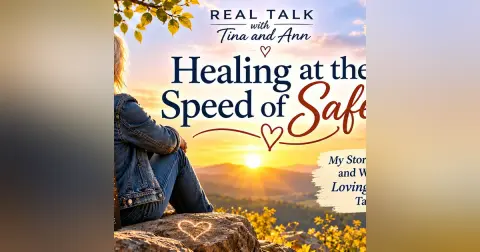
Send us Fan Mail Solo Episode with Ann On Memoir: Loving Differently We dig into what “healing at the speed of safety” actually means when your life has been shaped by adoption, loss, neurodivergence, and years of survival mode. We connect the dots between masking, achievement, trust, and boundaries, and we make the case that real progress starts when you stop trying to earn safety and begin building it. • healing only happens when safety, trust, and the right environment exist • ...

 Apple Podcasts

 Spotify

 Castro

 RSS Feed

 Amazon Music
Solo Episode with Ann On Memoir: Loving Differently
We dig into what “healing at the speed of safety” actually means when your life has been shaped by adoption, loss, neurodivergence, and years of survival mode. We connect the dots between masking, achievement, trust, and boundaries, and we make the case that real progress starts when you stop trying to earn safety and begin building it.
• healing only happens when safety, trust, and the right environment exist
• adoption, abandonment, and grief shaping beliefs about belonging and security
• survival skills turning into masking, hypervigilance, and losing sense of self
• neurodivergence and invisible struggles driving shame and overcompensation
• achievement not erasing old messages about worth and capability
• peace feeling unfamiliar after trauma and the impulse to brace for impact
• parenting kids with FASD and autism shifting the goal toward interdependence
• advocating for kids becoming a pathway to self-advocacy and accommodations
• reframing “what’s wrong with me” into “what happened to me”
• healing as quiet steps, boundaries, and receiving help without guilt
Get Loving Differently on Amazon, message me at ankegers.com or through Real Talk with Tina and Anne, and follow our newsletter
@Real Talk with Tina and Ann
00:00 - Healing At The Speed Of Safety
04:35 - Adoption Loss And Belonging
09:05 - Neurodivergence And Proving Worth
14:35 - When Peace Feels Unfamiliar
17:25 - Parenting FASD And Interdependence
22:45 - What Healing Really Looks Like
30:45 - Better Questions For Self-Compassion
37:35 - Key Takeaways And Next Steps
Healing At The Speed Of Safety
SPEAKER_00Welcome to Real Talk with Tina and Anne. I am Anne. Yeah, I have a little bit of a different backdrop. I'm dropping into some other people's podcasts. And because of that, I had to come up with a different background for the books that I have written and are out there and I'm having fun. I was just on with Jeff Noble, and it's going to be out like very, very soon. And then he's going to be on my podcast. Um, but he has a podcast about FASD, living with FASD, um, with success. So when I was on his episode, one of the things that I really talked about that made me want to come on here was the line that I said on his podcast. And I know he's going to really emphasize it as well, but it was healing at the speed of safety. And it is something that has been my entire life: healing at the speed of safety. You know, healing doesn't just happen. There has to be so many things that are in place for healing to take place. Uh, it happens when we finally begin to feel safe enough to heal. It happens when the right environment is in place, when the right people are in place, when trust is established. I really thought about this a lot when I wrote my memoir, which is loving differently, right there. Loving differently. When I sat down to write my memoir, you know, I thought and I believed that I was writing something that about overcoming. My whole platform is pain to purpose. My whole platform is overcoming the struggles, the adoptions, the losses, the traumas, the learning differences, the relationships, the struggles that I had, the inability to learn, the things that people told me that I would never accomplish. They defined me when I was a kid and told me, this is who you are. So I just believed that that's who I was, you know. Um, but something happened while I was writing the book, but also while I have been taking this journey in life, I mean, this has been a journey to where I am right now. I began to understand that I had spent an enormous amount of time surviving things that I had never really stopped to process. Because my life, like a lot of us, my life was full of, okay, this happened now, this, okay, now this, now this, sometimes 10 things in a day, and you don't even have time to process what's right in front, you know, what you're dealing with, or even what happened 10 steps ago, because of so much that we're trying to process, and it makes it hard. You know, I had learned how to get through. I had learned how to keep moving. I had learned how to be strong, but I hadn't learned how to feel safe. That's very different than everything else. And I want to talk about that right now, not from some like textbook kind of talk, but just talk. You and me, and I definitely don't have all the answers, but as somebody who has lived it, I've been there, and
Adoption Loss And Belonging
SPEAKER_00I have to tell you that lived experience says a lot. I'm gonna take us back. You know, I was adopted as a baby, and for a long time, adoption was something that I looked at through the lens of what it meant about me, how that defined me, where did I belong? Where did things happen? Why did things happen the way that they did? Was I wanted? Was I enough? And those are big questions, especially when you're conceived in rape. You know, you really do question who you are and the decisions of other people, the adults around you, when you're younger, you don't realize how much it affects you until you are an adult yourself. And you look back and you're like, oh my gosh, how did those decisions that the adults did when you were younger, how did that make you feel? And sometimes those feelings become beliefs. When I was 11 and my dad passed away suddenly, I can't tell you how profoundly that changed the trajectory of my life. I mean, everything changed in like a second. When you're a child and someone you love disappears from your world, you don't necessarily understand grief. You don't really have a clue what's happening. The only thing that you know is that you no longer see them anymore, and death takes on a new meaning. You understand that someone who was there yesterday isn't there today, the man who woke me up every single morning to go to school isn't waking me up now, and you begin to understand that the people and things that you depend on can disappear. I had already kind of known that, and I think that that's what made it worse as well, because you know, when you already have trauma as a baby, then you're in the system and you get adopted, and then you already understand that the people, the main adults in your life can disappear. You understand that. So I also experienced the loss of my sister, who she was in the family biologically, I was adopted in. She was given away after my dad passed away. Lies were told, secrets were kept, and it really did affect me even more. Those experiences shaped how I understood belonging and security. And here's something that I understand now that I did not, of course, understand then. When a child experiences loss or abandonment, they may not simply grieve what happened, they may begin organizing their entire life around making sure that it never happens again. That's what survival can look like. You become careful, watchful, you learn to read people, you learn when to speak, when to stay quiet, always vigilant, never trusting, and you try to become whatever you think the situation requires, a chameleon like no other, and eventually you become so good at adapting that you don't even realize that you're doing it, it just becomes who you think you are. In fact, it gets to the point where you don't even know who you are, not at all, but it's not necessarily anything about who you are, it's who you learned you needed to be to survive.
Neurodivergence And Proving Worth
SPEAKER_00There's another part of my story that shaped my understanding of safety. I am neurodivergent, I am fetal alcohol, autistic, ADHD, dyslexia. I mean, you name it, I have it. And I grew up in a time when learning differences weren't understood the way that they are now. And, you know, now they really would have probably handled my situation a lot differently than how it was way back in the Stone Age. But I was though diagnosed with these significant differences when I was five. And I struggled in ways that people didn't always see or understand. And I know that for a fact because these things are invisible, they're hidden, they're not things, and especially back then, they really didn't understand kids that had differences. I've told this story before. You know, I I um they said that I wouldn't graduate high school, but the part that they didn't figure in, which I've also talked about before, is the doctors weren't necessarily wrong about my challenges. They were right. They didn't understand how resilient I was, how strong I was, how determined I was. I got a bachelor's degree and a master's degree. I became a swim coach and a journalist, and I worked with survivors of violence, and I advocated for children and families, and I went to the hospitals and I held hands with people who had been raped. I worked with women who had been in the jail system. I accomplished things that people never imagined I would accomplish. And, you know, there's something that I want you to understand. Just because I succeeded doesn't mean those early messages didn't affect me. They did. I mean, I lived them. I felt them. I was them for 30 years of my life, probably, because when people repeatedly tell you what you can't do, you can spend your entire life trying to prove them wrong. And sometimes without realizing it, you begin measuring your worth by what you accomplish. You tell yourself, well, if I work harder, I'll be enough. If I achieve more, I'll be enough. If I can prove that I can do this, then maybe people will finally see me differently. But what I didn't understand for a really long time was that my worth was never supposed to depend on proving someone else wrong. I was worthy before the degree, before the career, before the accomplishments, before I became anyone's mom. I was worthy as that little girl who struggled to learn. And I wish I could go back and tell her that. I really do. I just talked about this on a couple podcasts with people. And I shared how I saw my seventh grade teacher that I really liked. And I went up to him at a reunion and I said, Oh, you know, I hi. And he was like, Oh, yeah, I remember you. You were one that had a lot of problems. And I hate that he did that. I really hate that he did that because he led with that, you know, and it was like, mm-mm. You know, when I look back at that kid, yes, I was hurting. I was in pain. I had just had my dad die. And my sister had just been given up to the system. And my mom had just told me that I wasn't allowed to talk to people about what happened, and I was made to keep secrets. All of that happened right when I entered seventh grade. You know what? I was a problem because there were a lot of problems, and I didn't know how to act. I didn't even know what to do. All of a sudden, my entire life was different, and I didn't even know who I was allowed to talk to or what I was allowed to say. And I entered into environments where I had been one way before and fine, and all of a sudden I wasn't. And when you add neurodivergence on top of it, oh my gosh, does it make it worse? I wish, I wish, I wish I could go back and tell myself at 11 and 12 years old that you're going to be okay and that you're going to have a really great life. You know, one of the things that I began recognizing while writing my book, Loving Differently, right there, was just how much of my life had been built around survival. I knew how to get through difficult situations. I knew
When Peace Feels Unfamiliar
SPEAKER_00how to keep going when things hurt. I knew how to function when everything around me felt uncertain. And I became really good at it. I was the master of masking. But here's the problem: when survival becomes your normal, peace is unfamiliar. I want to say that again. When survival becomes your normal, peace can feel unfamiliar. All of a sudden, when you feel it, it's like, wait a second. So you almost start doing things so that peace goes away. You can be in a situation where nothing terrible is happening and still find yourself waiting for something to go wrong. I spent 30, 40 almost years, I would say, living like that. You can have people who genuinely care about you and still struggle to trust that they won't leave. You can accomplish something wonderful and immediately start thinking, yeah, now what? I did that from the time my dad died, and they said you won and swimming, and I told them, I'm not going to get my medal because I don't deserve it. And I at that moment spent decades not succeeding on purpose, not realizing I was doing it on purpose, but I was. I think that's one of the things that we misunderstand about resilience. You know, we celebrate people who keep going, we celebrate people who overcome, we celebrate people who accomplish extraordinary things despite extraordinary circumstances, and we should, but we don't always ask what it cost, you know? We don't ask whether they feel safe, whether they can rest. We don't ask whether they know how to receive love without feeling that they have to earn it. For years, I thought being strong meant I could handle whatever came my way. Well, I still kind of do believe that, but now I understand that strength can also mean recognizing when something is hurting me. It can mean setting a boundary, it can mean walking away, it can mean asking for help. And sometimes it can mean allowing myself to stop. Not because I've given up, but because I no longer have to prove my strength
Parenting FASD And Interdependence
SPEAKER_00by how much pain I can endure. I have adopted five kids, and my three youngerest have very complex neurodevelopmental differences, including FASD and autism. I have spent years advocating for my kids, sitting in meetings, now virtual, because it is much easier for me to do virtual meetings because it's hard for me with my differences to sit in a room, small room, with a lot of people. It just is. So I'm glad that we've gone to virtual meetings. It helps me be able to advocate a lot easier. Um, but I've learned how to ask questions, I've learned how to challenge decisions, explaining why behavior might be a sign of an unmet need rather than defiance. You know, sometimes the behavior has nothing to do with somebody not wanting to do something. Maybe they're not able. I can remember a teacher asking me, why are you the only one in the class not taking notes? And my only answer was, I don't know. Guess what? I really didn't know, and I wasn't doing it on purpose. I had auditory problems that didn't allow me to hear it and write it down at the same time. I couldn't do it. I taught myself how to learn. Even when I was a journalist and I was interviewing people, everything was tape recorder. I did everything by listening, rewinding, listening, rewinding, taking notes. I mean, I was just willing to work really hard so I could be good at what I wanted to do. But anyway, I want to get back to this because I really wanted systems to understand that a child can be capable and still need support. My son, I'm homeschooling him now. They kept saying, we are going towards independence. We are doing these things to go towards independence. He's not going to go towards independence. He's going to go toward interdependence. This is something that we talk about all the time. Patty Casper in her 4D Living with FASD, read her book, Patricia Casper and others. We talk about this all the time. It's co co-regulating, co-helping, co-um interdependence, doing with. And, you know, while I'm doing all of these things, talking to people, something happened. As I learned to advocate for my kids, I began learning how to stand up for myself. I would sit in these meetings and explain that my kids needed accommodations, realizing that I did too, and I wasn't saying anything. You know, I was just like, how crazy is that? I started asking questions. I needed them to see my kids' strengths without ignoring their struggles. Now, all our school district is pretty good at that, but I also needed them to really understand the struggles that we had. And then I began asking myself questions. Why was I so willing to fight for those things for my kids, but so reluctant to believe that I deserved them myself? And I think that I didn't feel safe enough. I don't think I did. Why could I recognize that my kids weren't defined by their disabilities, but still carry shame about my own? Because I hadn't gotten to that point yet. I didn't feel safe enough to let them go. Why could I understand that they needed safety before they could learn, connect, or regulate, but expect myself to push through absolutely everything? Hmm. It was a really powerful realization because I began seeing parts of myself through my kids. I saw the frustration of being misunderstood. I saw what happens when people assume someone isn't trying hard enough. I saw how much difference the right support can make. And I saw that sometimes what looks like a resistance is really someone struggling just to feel safe in the room. Now, parenting kids. With complex needs isn't easy. And I am not trying to make it sound different than it is. These are difficult days. There are days when I don't have the answer. There are days when I question whether I'm doing anything right. But my kids have taught me something that I might have never learned otherwise. Understanding, understanding changes the way we respond to them. Understanding changes the way we respond to anyone. And that includes how we respond to ourselves.
What Healing Really Looks Like
SPEAKER_00Once we understand ourselves, we can change how we respond to ourselves. In loving differently, I write about progress, looking different after trauma. And this is where the idea of healing at the speed of safety became so important to me because I used to think healing meant getting over something, moving on, being strong, not allowing something to bother me anymore. But that's not healing. Sometimes that's just another version of survival or masking, I guess I could call it. Sometimes we're pushing ourselves so hard to get past what happened that we never stop to understand what it did to us. And I think we need to give ourselves permission to heal differently. It's okay. Some days progress is having a difficult conversation. Sometimes it's recognizing a pattern that we've repeated for years. And sometimes it's saying no without feeling that you have to explain yourself. You know, you don't always have to give a reason. Sometimes it's allowing someone to help you. And I'm not really that great at that. Some days, progress is simply recognizing that you're not ready to take the next step yet. That doesn't mean that you have failed. It does just mean that you're not there yet. It just means that maybe you're not feeling safe enough yet. It means healing isn't a race. Safety isn't something that we can force. And I think about that little girl that I was, the one who experienced loss, the one who struggled in school, the one who believed that she needed to prove herself. And I think about how often I expected that little girl to just keep going, be strong, be better, ignore all my needs and thoughts and feelings and just work harder. Don't let anything stop you. But if what she needed wasn't another challenge to overcome, what if she needed someone to tell her that she was safe? You know, at that time in my life, I really don't think anybody could have told me I was safe. Because I wasn't. And see, that's the thing. We can't have kids and people go living in trauma, living in trauma. You can't, I'm gonna talk about this in my podcast coming up with um Paige Gordon from her bulimia book. It was much more than bulimia, but one of the things that she her counselor told her is that you can't heal in a war zone. You can't heal while the war is still going on, and that is so true. It that was a very profound statement. We ask these kids to heal, we act, we want them to try to be normal, normal, whatever that means. We want them to try to keep going and act as if nothing is happening, even though they are living in a war. And I I I think that that is a lot to ask. What if that little girl, Ann, needed someone to tell her that I didn't have to earn love? What if she needed someone to tell her that being different didn't mean less? You know, Temple Grandin is really great about that statement. And it is really true. I felt less than in every single room that I was in. I never I really did feel like I was worth less. What if that little Anne needed someone to tell her that being what if that little Anne, after all these years, that I could be the person for her? What if you, as the adult, could be the person that that little kid always needed? You know, that's what writing this book helped me begin to understand. I could stop judging the younger version of myself for how she survived and the mistakes that I made in the relationships that I stayed in, and the abuse that I endured way longer than I should have. And I need to start appreciating how hard that I worked to get me here. I could also recognize that I don't have to keep living by every rule that that little girl learned. The things that helped me survive as a kid, you know, they don't have to come with me for the rest of my life. The day that my adopted mom passed away, I got this tattoo of uh of the dove releasing. And it was a day I started breathing, and I started saying to myself, you know what? Now I can start living differently. There are people in your life that you can't have in your life in order for you to grow because they're toxic, and that's just the way it is, no matter how close they are to you, it is healing at the speed of safety. And you know, it's also true whether it's real safety or not. I mean, sometimes it could be perceived unsafety, and but it's still real, it's still real. So even if you feel as if something is you're not safe yet, hey, all those things are still in there. They're still in there. That vigilance, that person that you were, in order to make it with all the things that you endured, you need to give yourself a break because there's a reason that you feel you still don't feel safe. But there's things that can still stay with me: resilience, determination, the ability to advocate for myself, the tool belt that I have built, that I am writing about with my loving differently book. Um, I have a companion workbook that's going to be coming out. I can begin letting go of the belief that I have to earn my place in the world. I don't have to earn it. I just am. I'm just here. You know, when I began writing loving differently, I wanted to give people the tools that I had developed through my life. I wanted people to know even when life is incredibly difficult, we can keep moving forward. That our past doesn't have to dictate our future, that we can take what we've learned and use it to help someone else. I still believe in that with all of my heart. And I still believe every one of those things. I believe turning pain into purpose. I came out of writing that book, loving differently, with something that I didn't
Better Questions For Self-Compassion
SPEAKER_00expect, a different understanding of myself. The more I allow myself to understand myself differently, the more it happens. I began looking at my childhood through adult eyes. I began recognizing patterns that I hadn't understood before. I began seeing the connection between the things that I'd experienced and the ways that I'd learned to protect myself. And instead of asking, what's wrong with me? I really did start asking, what happened to me for me to be handling this like this and not feel safe enough to move on. And another question was, what did I need that I wasn't getting? You know, these are really different questions. One leads to judgment, the other opens the door to understanding. And for someone who spent so much of her life trying to prove herself, it's a profound change. I began understanding that I could acknowledge what happened without allowing it, that, all of that, to define everything about me, that seventh grade teacher. I could grieve what I didn't receive. I could recognize the ways that I'd adapted, and I could begin making different choices, not because the past had disappeared, but because I was finally learning that I had choices in the present. One of the lines that I return to is you adapted to survive. Now you get to live. And I think that's where I'm I am in my journey. I'm still learning, growing, recognizing patterns, and I'm still figuring out what safety looks like for me. And I no longer believe healing has to look like some dramatic transformation where one day everything is suddenly okay. Sometimes healing is quiet. Sometimes it's realizing you don't have to defend yourself. Sometimes it's trusting your own voice. Sometimes it's recognizing that you deserve the same compassion that you've spent your life giving everyone else. Sometimes it's simply looking back at the person that you used to be and saying, you did the best that you could with what you knew, and now we can do things differently. If you're listening today and you've spent years trying to overcome something, like I have, I want you to consider a different way of looking at your journey. Maybe you've spent your whole life being the strong one. Maybe you've become very good at pushing through pain. Maybe you've accomplished things that nobody believed that you could accomplish, but maybe you're just tired. Maybe you've never really stopped to understand why certain situations feel so threatening, why you struggle to trust and you just don't feel safe enough to grow. Why you feel responsible for everyone else's emotions or why slowing down can sometimes feel harder than pushing forward. I understand that because I've lived it. And here's what I want you to remember: you don't have to heal on someone else's timeline. You don't have to prove that you are over something because enough years have passed. There's no timeline. You don't have to turn every painful experience into a lesson before you're ready. And you don't have to earn the right to feel safe. You know, things don't happen for a reason. I don't believe that, but things happen, and it's what we do with it that matters. Healing at the speed of safety means recognizing that your progress belongs to you. It belongs to you. It means understanding that the goal isn't isn't to become someone who was never hurt. The goal is to become someone who no longer has to organize their entire life around that hurt. I don't believe every loss or every painful experience was somehow necessary. There are things that happened in my life that I wish had never happened. But I do believe that what happened to me doesn't have to be the end of the story. I can decide what I do with it. I can decide to do with what I've learned from it. I can use my voice. I can advocate, I can do this, I can love differently, and I can continue building a life that isn't defined solely by what I survived. Writing differently didn't erase my past. It didn't make every difficult memory disappear. And it didn't mean I suddenly had the answers, but I helped me understand something I wish I'd known way earlier. I don't have to keep proving that I'm strong enough to survive. I can begin building a life where I feel safe enough to live. That's the difference. And maybe that's what healing really looks like with safety, not forgetting, not pretending, not becoming someone entirely different, but finally giving ourselves permission to be who we are without caring every belief that pain taught us. You know, I went into writing loving differently, hoping to help other people. I came out helping myself too. I'm still on that journey. So if there's one thing that I want you to take away from today's conversation, it's this. You adapted to survive. Now you get to live, you get to heal at the speed of safety. And I hope and I pray for you that your environment is safe and you're allowing yourself gradual pacing, gradual steps forward, even if it's just the one in front of you. Take it. You get to do it
Key Takeaways And Next Steps
SPEAKER_00at your own pace, at the speed of safety. Thank you for spending this time with me. And remember, hey, look, see, oh, that is another book. The little bird who flew differently. That's mine too. It's a children's book. Adults would love it too. About neurodivergence. But over here, loving differently, get it. Amazon. Um, I have it on Kindle, Kindle Direct, uh or whatever it's called, Unlimited, Kindle Unlimited, so you can have have it for free. I mean, I only have it listed at like 16 or something, but the time by the time you check out, it's more. So I apologize for that if you decide to get it in paper, um, in paperback. Maybe I'll just drop the price even down more because I'm only getting a couple bucks for it, if that. I mean, so I mean, it's all Amazon and their pricing. So I apologize for that if it's a little bit pricey. Uh, you can actually email me at uh ankegers.com. There's a way to message me there. There's a way to message me at Real Talk with Tina and Anne, where I co-host a podcast with my friend Tina. So you can message me through either one of those and I can get it and follow our newsletter. I would love for that. Um, I'm actually getting lots of people now following the newsletter every day. I get people who are requesting. So I'm very thrilled about that, that we're reaching people. But my last words here are as we always say on the podcast, there is purpose in the pain. There is hope in the journey. And we will see you next time.