The Finishing of a Memoir
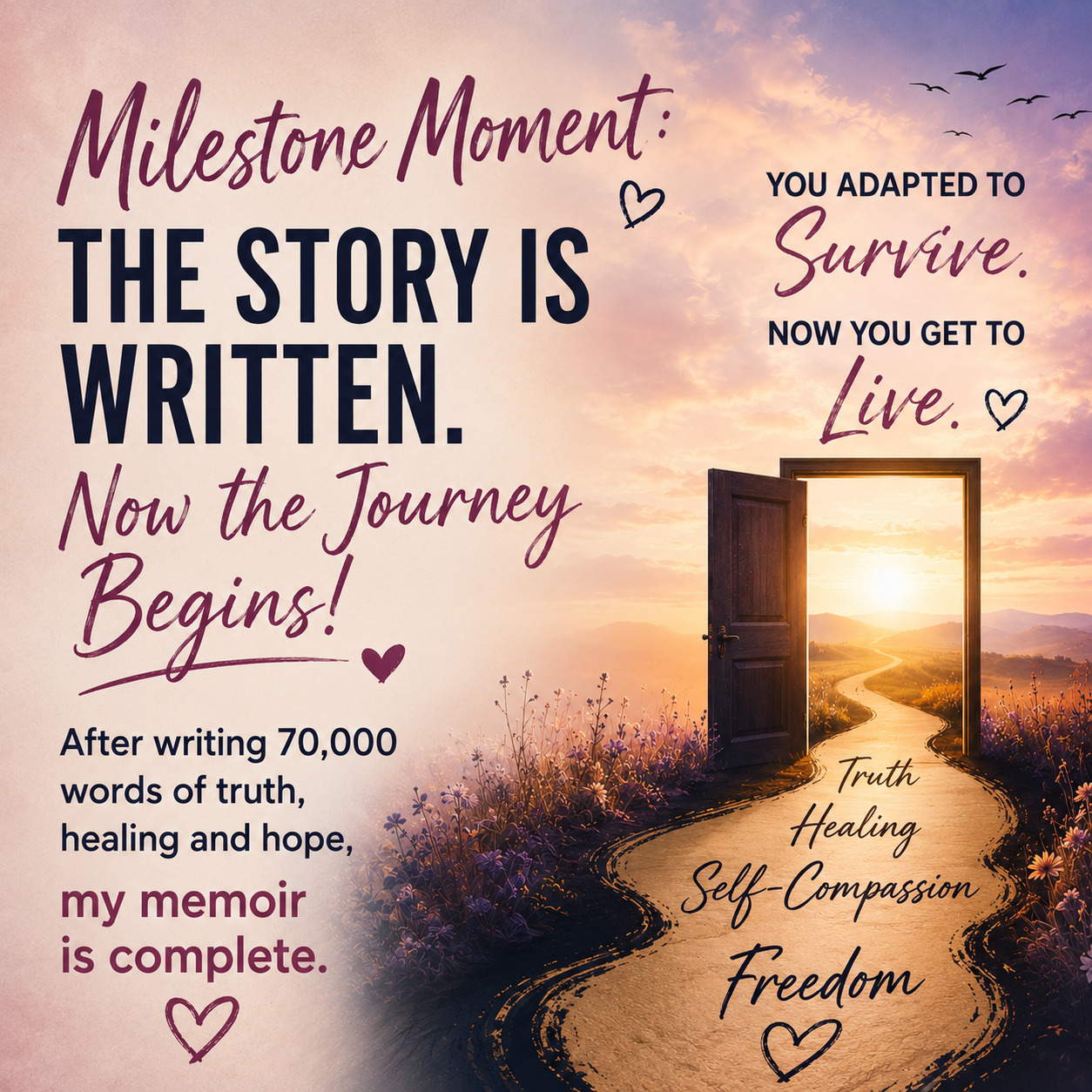
Finishing my memoir has been one of the most emotional experiences of my life.
Not because writing 70,000 words is easy. Trust me, it is not. But because every chapter forced me to sit face-to-face with versions of myself I spent years trying to outrun, silence, fix, or hide.
And somewhere in the middle of writing this book, I realized something that changed me:
A lot of what I thought were flaws were actually survival skills.
That realization hit me harder than I expected.
For years, I thought being hyperaware, over-apologizing, shutting down emotionally, masking exhaustion, and constantly monitoring other people’s emotions were just parts of my personality. I thought shrinking myself to make other people comfortable was maturity. I thought functioning while exhausted was strength.
But survival mode has a way of disguising itself as identity.
When you grow up in environments where you do not feel emotionally safe, your brain adapts. It learns how to protect you. Sometimes that protection looks like perfectionism. Sometimes it looks like people pleasing. Sometimes it looks like emotional numbness, isolation, anxiety, or becoming “the strong one” because you never believed anyone else would carry you.
For me, as someone who is neurodivergent, adopted, and shaped by trauma very early in life, adapting became automatic. I became skilled at reading rooms, masking discomfort, and functioning through exhaustion long before I understood what safety even felt like.
And the truth is, many people praised those adaptations.
People praise hyper-independence.
They praise overachievement.
They praise the ability to “keep going no matter what.”
But eventually, your body keeps score.
At some point, survival stops feeling like strength and starts feeling like burnout.
That is part of what this memoir forced me to confront.
Not just what happened to me, but how what happened shaped the way I moved through the world.
There is a huge difference between surviving and living.
Surviving says:
Stay small.
Stay quiet.
Do not burden anyone.
Do whatever it takes to avoid rejection, conflict, or abandonment.
Living says:
You are allowed to rest.
You are allowed to take up space.
You are allowed to be honest about your pain.
You are allowed to need connection.
One of the hardest parts of healing is realizing that some of the behaviors that protected you as a child may be hurting you as an adult.
Hypervigilance becomes anxiety.
Self-protection becomes isolation.
Masking becomes exhaustion.
People pleasing becomes resentment and emotional depletion.
And yet, I do not hate the younger version of myself anymore.
That may be the greatest thing this writing process gave me.
I understand her now.
I understand why she adapted the way she did. I understand why she tried to disappear in certain rooms. I understand why social situations felt overwhelming enough that alcohol sometimes felt like relief instead of recreation. I understand why functioning became more important than feeling.
And understanding creates compassion.
For so many years, I asked:
“What is wrong with me?”
Now I ask:
“What happened to me that taught me I had to survive this way?”
That shift changes everything.
Because healing is not about despising the person you used to be.
Healing is learning how to honor the version of you that survived without remaining trapped inside survival mode forever.
As I enter the submission process for this memoir, I know this book is about more than my story.
It is about every person who learned to survive before they learned to feel safe.
It is about the people who are exhausted from masking.
The people who feel too much.
The people who shut down.
The people who apologize for existing.
The people who became who they needed to become in order to make it through.
And maybe the goal is not to shame those parts of ourselves anymore.
Maybe the goal is to finally thank them for helping us survive… while gently learning we deserve more than survival now.
We deserve honesty.
Rest.
Safety.
Connection.
Peace.
Not perfection.
Just healing.
Because there is purpose in the pain and hope in the journey.

Writer/Podcaster
What do I say about myself? I love telling other people's stories, but hmmmm...Let me think.
When I think about my life, I have so many chapters. I am a very compartmentalized person.
I am first of all a mom of 5 kids. Yep...5!
I am a grandma to 5 beautiful children! All gingers lol.
I am a writer, author, podcaster, oh my gosh...I've been a journalist, columnist, hard news writer for print. I have actually won quite a few awards for my writing.
I am a photographer. I LOVE getting the money shot and capturing life! I do have a website called Spectrum Photography, but I have it offline more than on because I cannot figure out how to make the pictures work on Etsy lol. I'm not good at that kind of stuff.
I very much am an autistic individual, ADHD and dyslexic. Yep I got it all lol. I'm not that great a executive functioning, but I have many great ideas! I am trying to put things into fruition, but it just takes me longer and I probably make more mistakes, but I don' give up!!!
I have had many lives in the working world. I've worked in the jail system with helping women and talking with them, praying with them. I was the director of a battered woman's shelter/rape crisis center. I oversaw the crisis hotline at the center. I worked with abused boys. I was an Assistant Director at a school for kids with autism. I was a head swim coach for 12 years. Yep--former swimmer myself lol.
I was adopted. I've adopted 5 kids. And if you want to know the history of my crazy buffet of a family lol...I will tell you, but … Read More
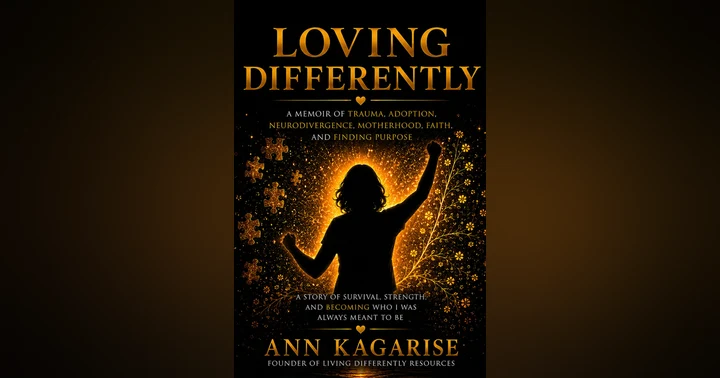
Loving Differently Tool Belt