Diagnosis Day: Neurodivergent Parenting-A Segment of Real Talk with Tina and Ann

Send us a text Today on Real Talk with Tina and Ann we are talking about neurodivergence and share a raw, practical look at “diagnosis day,” advocacy, and the tools that actually help our kids thrive. Nothing about our kids changed with labels; only our map did, and that map guides support with less shame and more clarity. • early signs, and the long road to evaluation • diagnosis day emotions of relief and grief • processing speed, executive function, shutdowns, and transitions • written ex...

 Apple Podcasts

 Spotify

 Castro

 RSS Feed

 Amazon Music
Today on Real Talk with Tina and Ann we are talking about neurodivergence and share a raw, practical look at “diagnosis day,” advocacy, and the tools that actually help our kids thrive. Nothing about our kids changed with labels; only our map did, and that map guides support with less shame and more clarity.
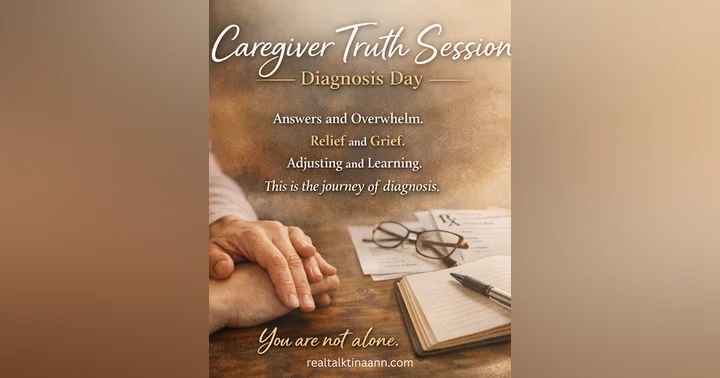
• early signs, and the long road to evaluation
• diagnosis day emotions of relief and grief
• processing speed, executive function, shutdowns, and transitions
• written expression disorder, dysgraphia, and speech-to-text wins
• homeschooling choices, hands-on learning, and fewer words
• school trust breaks, IEP rights, and practical advocacy
• services, therapies, and redefining success on a personal timeline
• balancing hope and fear while carrying the caregiver load
Thank you so much for listening and being a part of this show
#autism, #fetalalcohol, #adhd, #DiGeorgeSyndrome, #neurodivergence,
@Real Talk with Tina and Ann
00:08 - Setting The New Show Focus
00:58 - Centering Neurodivergence And Lived Experience
03:43 - Adoption Story And Early Signs
06:53 - The Testing Marathon And Diagnosis Day
09:50 - New Labels: Autism, ADHD, Anxiety, Dysgraphia
12:49 - Written Expression Barriers And Workarounds
16:22 - Discovering Speech To Text Wins
20:00 - Processing Speed, Executive Function, Transitions
24:33 - Shutdowns And Softer Transitions
27:41 - Pragmatics, Social Strain, And Therapies
31:20 - Why Homeschooling Became Essential
35:45 - Hands‑On Learning And Fewer Words
39:50 - Appointments, Tools, And Acceptance
43:06 - Relief And Grief After Diagnosis
47:06 - Redefining Success And Timelines
51:06 - When Schools’ Expectations Don’t Fit
0:08 Well, welcome, Real Talkers. Um, I am Anne, and Tina and I have been talking about having different segments within Real Talk with Tina and Anne. We are uh many things. We are neurodivergence, we are trauma, we are mental health, we are overcoming. Um, really the thread through all of that is overcoming. But when Tina and I were talking about our format and what we want to do, uh, we wanted to start narrowing it. Um, we wanted to start really honing in on some certain ones that we are and really push, you know, who we are and what we believe in.
0:58 And I gotta tell you, one of the main ones that we're gonna be talking about on a pretty regular basis, and you can tune in when uh this topic hits you, and it's neurodivergence, and it can come in any form. There are so many different forms of neurodivergence, and in my household we have a lot of neurodivergence. Um I come from a place where you know it's I understand it and I know it, and I've lived it since I was born and three of my kids, and I'm a caregiver, a parent of people with neurodivergence.
1:49 Uh I've also worked in the field. I have a master's degree, and you know, my whole entire uh thing with neurodivergence is uh it's okay when it happens with me. I have figured it out. I I was a kid that was, you know, really struggled in school. And and uh they said I probably would not graduate high school and I figured it out all the way to a master's degree and taught myself how to learn. Well, my kids are a different story, and it's different when you're the parent and you're the one that's advocating for them.
2:32 I have uh I adopted the these three kids, and one was two months, and one was 18 months, and one was four years, just almost four years, and he was nonverbal. Uh, so I mean, we already knew that he had challenges. So one day, uh, we my one son and I spent the entire day at a fecal fetal alcohol center clinic, and uh it was quite a long day. I don't know if any of you have other ever had a lot of testing, whether it be autism or fetal alcohol syndrome, um, or any really any kind of neurodivergence where you go to a neuropsychologist or developmental, um, neurodevelopmental, whatever it is.
3:26 I mean, there's just so many testings and pieces parts to the whole entire thing. It's it's not uh just go in and say, I have this symptom, and then you get diagnosed. I mean, it's pretty a substantial thing that you have to go through. And so then, you know, I knew that yesterday was diagnosis day, you know. That's what I came out of this with, you know, diagnosis day. Hmm. You know, my son, um, he just got several more diagnoses yesterday, and actually they added um a lot more than I even expected.
4:08 I was a little shocked. I mean, I know he has autism, I know he has ADHD, and I really did start thinking that he had fetal alcohol syndrome. I I mean, I was pretty sure of it because his brother has it, and uh, they're related, so I was pretty sure. So we did end up getting anxiety, which I mean that goes along with really all of this that's been going on. Um, he also got some things I'd never heard of. Um, well, he does have written expression disorder, and I knew I mean, when he went in, they it was so bad he he couldn't even get scored. And I knew that because I'm homeschooling him and he reached a point in school that he wasn't able to be in school anymore.
4:58 So we ended up pulling him from school, and um, it was the right decision. And the more I learned about him yesterday, it really was the right decision. So he's um unable to take his thoughts because of his low executive functioning and because of his which he has something called dysgraphia, which I had never even heard of that before. But it's because he has low uh motor skills, gross motor and fine motor. So because of that and his executive functioning and a bunch of other things that are going on with him, he's unable to take what's in here in the brain and put it down on paper.
5:49 But he can talk all day. I mean, he doesn't have a problem saying what he's thinking, and so he's only in third grade. So we were going to end up having to um try to figure out different ways that we could help him because you know he where he's learning writing, writing longer papers, um, which he just can't do. I mean, it takes him 10 minutes to write his name. So we I've been avoiding that. I'm not gonna lie. I mean, I've been avoiding it. But then somebody had said something to me about speech detects, and I was like, oh, well, that's really awesome.
6:29 Let's just do that. So in one of his programs, you know, we had that. And so he just said the whole entire paper that he wanted to say. And it was like playing something with Fortnite or the Titanic, that was one of his papers because he's knows so much about the Titanic. And he just started, you know, saying all these things, and we grouped them in paragraphs and we we did everything, edited it. Uh, and he was so proud of it because he has not been able to do that, you know. I mean, I was just so proud of him for being so proud of himself. And he ended up um, we printed it and he was reading his paper to people.
7:13 And I'm just like, I mean, you know, when I was growing up, we didn't have those skills, we didn't have those abilities to be able to just do speech to text. We had to figure it out and write, even though it was difficult. So, you know, some people have a lot of mixed messages about AI and different things like that. But I'll tell you, those kind of things are the things that I'm really grateful for for my kids. But I do want to talk about this, not as a clinician, but as a and or as a professional, because honestly, I don't know it as that. Um, but I am a parent who walked into an appointment hoping to clarify some things that were going on with him.
8:02 And I walked out carrying answers and I was overwhelmed at the same time. So anybody that understands um what it's like to go through diagnosis day is uh, you know, it can be a scary thing because it it's complicated. There is relief, you know, there there's validation, and there's a quiet moment when you realize that parenting just changed again. And isn't that interesting? And it it a lot of it has to do with I I'm not even gonna say expectations, because I believe that no matter what your diagnosis, that the sky's the limit and nobody can put limitations on you.
8:55 Um I think what it does come down to it's just how do we get there? How do we get there? And it's okay. Things are just gonna be a little harder, but we're gonna get there. And I already knew that they were hard because I spend every day with him. So I know how this kid, how hard it is to school him. Um, but anyway, we will get there. Uh, and I'm glad that we know because, you know, now we we can use the right tools. People, and I do know some people that have chosen not to go the route of diagnosis, and I don't blame them for that.
9:38 I mean, it everybody's walk is what they need to do. Um, but I want to use the tools that are out there for my kid. And I always say, you know, don't be ashamed of a diagnosis because it really does help you know what you need to do in order to be your best self. Uh, and it doesn't hold you back either. Uh, somebody had said that to me recently. It doesn't hold you back to know that you have autism or to know that you're fetal alcohol. I really do believe that it just helps you better navigate the world. That's all. And I think after you get to the diagnosis, the real work begins.
10:22 And it's not the paperwork anymore. I mean, I've done, I've filled out many paperworks. Um, it's and it's not about the label, it's it's about the understanding because the words themselves are only the beginning. What matters is what it means in everyday life. When they told me that his processing speed is really slow, I mean, it really didn't surprise me. I realized how fat um how often that I had been speaking too fast, giving too many instructions, watching him shut down when we were uh looking at a video that was too much instruction, too many words, expecting responses that his brain simply didn't have time to organize, you know, in his head.
11:14 And processing speed is not about intelligence. That's the thing that you have to really do. I mean, it's fine. All of these things don't have anything to do with intelligence. I mean, uh, when you test my IQ, um, it's something like 130, 135, or something like that. But then when you factor in the working memory, it's like 69. It's all about knowing how, like I said, his brain needs space between input and output. And I understand that. So when when he's giving multiple demands at once, it's not that he doesn't know what to respond, or that it's not that he doesn't want to respond, it's that his system becomes overwhelmed trying to hold everything at the same time.
12:12 Executive functioning, that's the tricky one. And he has a very low executive functioning, and so do I. And those kind of challenges show up as task avoidance many times, but avoidance is not laziness and it's protection, it's the nervous system recognizing that something feels off, that something feels too big, too complex, or too fast. And also, you know, transitions are a really big one, and transitions are hard and sometimes incredibly hard.
12:58 What feels like a small change to other people can feel like a cliff edge to him or other people in this situation, and moving from one activity to another requires more support, more warning, more patience. And we do that. I mean, it's like, okay, we're gonna be leaving in 15 minutes, then 10 minutes, then five minutes, you know, and even give me more uh time after that. And I'm the same thing. I'm the last one to leave the house when we leave because I have to come in several times. I have to just it's it's this thing that I have to prepare myself to move on to the next thing.
13:45 And I know that about myself. And shutdown does happen. It does happen with him, it happens with me and lots of other people in this situation, and it's not defiance. It is an it's not an attitude, it is the brain saying that I can't process anymore right now. Understanding that change, how I respond, how we respond as a parent. You know, I stopped pushing harder and I started creating softer transitions. The other thing that came up that I kind of mentioned was that written expression is really hard for him.
14:30 And, you know, he's right there at the written expression disorder. They said that he basically has it, but he scored too low to even score it because he couldn't write. And um, like I said about dysgraphia, you know, the those completely shifted how we approach learning. Uh and I knew those things, but I didn't have names for them. So writing by hand, like I told you earlier, if it's too difficult, there is nothing wrong with finding a different way. It's just exhausting neurologically and physically. It's so exhausting neurologically and physically to be able to do those things when your brain won't let you.
15:15 So speech detects is the thing that we decided to do. It's not a shortcut, it's not an excuse, it's accessibility. And I am very happy that he can do those things. He has so many ideas and thoughts, and he just needs a different path to express them. So please don't ever think that your child is taking a shortcut if they need to use speech to text socially. He is the absolute sweetest kid. And it just breaks my heart because he he loves everybody, he's the first one to run up to people and give them a hug, and he recognizes everybody, but he didn't get a lot of that in return, and he has developed a toughness about him that I hate that he's had to do.
16:23 Um because, you know, he doesn't have the pragmatic communication, which it's so much different than language. Um it's it's an understanding of what's coming in the brain, and really being able to have a back and forth conversation, you know. Um, kids with autism and FASD, any a lot of neurodivergence can be so literal. And being able to really grasp what's going on in language and understand the world around you and what's really happening and what's really being said um is is very difficult.
17:11 And sometimes it's even people will say, well, he's really intelligent, he's really smart, um, because he has the language. But when you don't have the pragmatic piece, I mean that's he he can just have a completely different conversation with people than they're having, and he doesn't even know it. So he talks over people, you know. I mean, he he doesn't understand that other people aren't interested or aren't listening. You know, adults are great with him, adults know exactly what to do, but it's his peers, and they just tune out, of course, or they walk away, or they look at him like he's strange.
18:00 And so I feel really bad for him in those circumstances. So, of course, I mean, some of the things that we have to do, and he was in speech, and they actually dismissed him in speech because he had such great language. Um, but it's not that, like I said, so they have to learn to work on other things. He has occupational therapy. We we have a lot of medical appointments again that we're going to reschedule because um he had been dismissed. And now because we have these diagnoses, it can back up everything that we've been saying. And they're specifically putting them in in a different way.
18:40 And I don't know if it's coding or what, but so they're actually he's actually gonna get the help that he needs now. You know, social rules don't come naturally to him or a lot of people that have these types of neurodivergence, and they are learned intentionally, and that means that patience, repetition, and celebrating effort instead of perfection, and that's what we've had to do. You know, his developmental coordination challenges also affect this because he's very awkward, I guess I could say.
19:22 Uh, and things that seem simple from the outside require more effort internally for him. And um, he definitely has the autism run, and he's he's got a lot of work on, he has a lot of work to do when it comes to gay uh when it comes to fine motor and gross motor. And then, you know, when you throw anxiety into the mix and you begin to understand how heavy the world can feel to him sometimes. And this is where homeschooling really did become a part of our journey, not because we gave up on traditional education.
20:08 There were some things that absolutely happened in our in his traditional education. And uh, you know, and and anybody that is listening can tell me what you think about this because he was in a class and he was absolutely doing his best in first grade. And it ended up where he um it it was a place, it was a classroom environment where they earned bucks, dollars for and they could buy things. And he was saving up actually to eat lunch with his teacher. That really meant a lot to him. And what ended up happening was she um he during a lockdown drill, which look, it was first grade, and I know that he should have been not giggling through a little hole in a desk where a kid had his eye up against, and my son could see his eye, and they were kind of giggling about it.
21:08 And the teacher told him to be quiet. This was a lockdown drill. Well, the kid did it again, and they ended up laughing again, and it was a little small giggle. I am not excusing that. He should not have done that. Um, again, he was what six? But the teacher had him in front of the class come over, and she said, Give me all of your dollars that he had already earned. You don't take away what a child has already earned, and he wouldn't go to school anymore. So, I mean, I we tried everything.
21:49 And even the head of one of the departments came to our house. And the only thing that I didn't agree with her how she handled it, because our school just Is great. I really don't even like ever saying anything negative about the district itself because of how much I care about my kids. But she did say, you know, I don't know why you think going to school is a choice. And, you know, it's it we have to realize and we have to take the whole child into perspective and not just it. He didn't, I don't even think he saw the choice at the moment. He was scared. He was upset.
22:30 Um, he had been betrayed. He had learned, look, I worked really hard for these things, and she embarrassed me. She um took everything I earned, and he was crushed. He was crushed. And so then we did end up going to another elementary school. And then it ended up that uh the principal wasn't honest with him two times. And so that really affected him. And it got to the point where we were just like, you know what, you're just gonna be home. And he was not able to stay in the classroom, and he kept getting into um trouble.
23:12 Not huge troubles, but enough where he needed to, you know, start. He he just wasn't able to regulate. Let's put it that way. He wasn't able to regulate. So I'm really glad that we um decided to keep him home. He needs hands-on learning, and there's a lot of kids that are in this situation. We switched to really amazing online programs that he can get on there and he can just is he can do it himself now. I mean, he just gets on and it's really hands-on learning. But as soon as we hit uh a program where there's a lot of words, all he hears is blah, blah, blah.
24:00 And I always I even wrote for Autism Speaks one time, and and that was the name of it. All I hear is blah, blah, blah. Um, too many words isn't good for anybody that has these types of neurodivergence. So the less words to explain what they have to learn and the task itself and what is expected, the better. So he just gets on and he plays um these really interactive games, like, and and he he's really learned from it. He can do all of the grammar skills that he needed to learn for third grade already.
24:40 And we're not even done with the year um and math. So, and he he does about three to four hours a day of school. And it's there's some days that he'll say, Oh my gosh, I didn't even know that we had been doing school that long. So that should tell you how great these hands-on programs are. And I'm I'm not, I don't have them as sponsors or anything. Um, but Splash Learn is really one of his favorites. Um, IXL is an amazing one that he uses. Um, because he, you know, and one of the things is is earning, and and they can't take it away from him.
25:24 He gets stickers and it's like really online sticker, and he just clicks on it, and then there's a sticker that comes up on the screen, and he's so excited about it. I mean, it's just those really small things. So it doesn't take much to make these kids happy. If we do end up talking too much, um, it creates cognitive fatigue, and that doesn't help anybody. And then on the other side of that, I kind of mentioned it a little bit, but there are many appointments that we have: doctors, therapies, behavioral support, not because he's broken, but because his nervous system needs tools to navigate a world that moves much faster than he can process.
26:13 And I've always said, you know, that my brain is always tired because I'm trying to make it in a world that wasn't meant for me. There was a moment after we got the diagnosis when everything got really quiet for me. Not outside, inside me, because I remember looking at my child and thinking, nothing about him changed today. He is still the same kid that he was yesterday. He is he still laughs the same way, he still has the same interests, the same heart, the same spirit.
26:57 The only thing that changed was that it was validated what I was already thinking, and that realization hit me hard because diagnosis doesn't create the child that you see, it reveals the child who has always been there, and in that moment, I felt two things at the same time. I do feel relief because I already knew, and I'm very grateful for our team of people that help my kids, and and it gives you a language for what we're experiencing.
27:41 I also feel a grief because I knew that the world might not always understand him the way I do, and that's really hard to. I mean, it's like I feel like I'm his one-on-one, but I feel like I need to be that for the rest of his life, and I can't be, and that's really hard for me, and I know that God will provide for him through his life. I just want always everybody to be nice and kind and understanding to him. That's what I want.
28:21 I mean, isn't that what we all want? I mean, he offers that to other people. He offers the kindness to them, but then he doesn't get it back. And that that's so hard, that's so hard to watch. But it's this moment where you hold both hope and fear at the same time, you know, when when you're proud of your child and exhausted from from fighting for them, because we know as parents, as advocates, that what we do is advocate for our kids. We would fight for them all day long if we have to, and I do.
29:04 Um, when you love them exactly as they are, but still worry about how hard things might be for them. You know, if you've ever sat in that space where love and overwhelm exist together, I really do want you to know something that you're not weak for feeling both. We are human. This is not easy because these are our kids. Like I said, it was easy for me to feel these things about myself. I'm fine, but not my kid. It's difficult.
29:44 And and this is the part that people don't talk about enough, you know, what diagnosis does to the caregiver. Diagnosis is not just information, it is emotional whiplash. You you feel relief because you finally have answers. You feel grief because you realize that the road may be harder than you imagined. You feel guilt wondering if you missed something and maybe we should have got here sooner. You know, you can't second guess really. You feel fierce protectiveness because now you understand how much support your child truly needs.
30:25 And sometimes you feel completely exhausted because you are managing appointments and therapies and education plans and everyday life at the same time. And I know that because I have three kids where, you know, that's where my focus is. You become the advocate, the coordinator, the translator between professionals and the person who sees your child's strengths, even when systems focus on deficits. You know, that's what you are. You're the person who sees your child's strengths, even when all you're hearing is deficits.
31:09 And if you are listening to this and feel overwhelmed, that doesn't mean that you are failing. It means that you're carrying something heavy. And that's what we do as parents, isn't it? What has helped us is learning to adapt instead of resist the speech to text instead of forcing handwriting, hands-on learning instead of passive listening, fewer words, clear expectations, one task at a time, and most importantly, there can be a redefining of success, but I just think it's a redefining in how to get there.
31:56 That's how I see it. Success doesn't look like keeping up with everyone else's timeline. And Tina and I just had a podcast on that, on timelines. And everybody's timelines are different. Success looks like growth that honors how hit how his brain works, how our brains work, and we need to honor that. Diagnosis didn't change who he is, and that's what is probably the most important thing. It changed how I understand some things, and now I know. Now I know.
32:38 It it gave me a map, and maps don't limit us, they guide. So if there is one thing that I want you to take with you today, it's this diagnosis is not the moment that your child becomes limited. Not at all. It's the moment that you gain the language, just support them more deeply. Caregiving is not about fixing, it's about learning who they are. It's about adjusting, it's about loving someone enough to meet them where they are instead of forcing them to meet expectations that were never designed for them.
33:26 I could say that 50 times. It is about loving someone enough to meet them where they are, instead of forcing them to meet expectations that were never designed for them. Like I said, I love my school district. They are probably one of the best. Um, and when I was the director at a school for kids with autism, I can honestly say that our school district is better than all the ones that we dealt with there. Uh, they really do try with everything in them, at least in my experience, to meet them where they are.
34:12 I mean, I've heard things from other parents that don't line up with that. But I know in my experience that they have done that for me and my three kids. Um, but with that said, it's really hard still because there are expectations. There's expectations, and that's what school is all about. Um, but and and one of my kids is in a school for kids that are that have differences, and they do the best that they can to meet them where they are. My one son um has reached his potential there.
34:54 I mean, he's not right now able to go further. And I praise the teachers for continually trying, but his he's not able to regulate anymore. He has them the George syndrome and fetal alcohol syndrome and autism and ADHD and a slew of things. And it's really hard for him to regulate. He walks in the door at school, dysregulated, and then they keep putting on all these expectations. Again, that is not their fault.
35:37 That's their job. Unfortunately, he is completely unable to meet those expectations. They just aren't designed for him, they're not designed for his brain. And that's just the way it is. Um, I I feel bad for him. Uh, we're talking about changing his complete day, and now he's gonna go to two hours a day. Um, and it's just gonna be like functional learning, you know, and we've been talking about this for a while, but there is no reason to try to make these kids sit in desks and keep learning the same math problems and the same language arts and write paragraphs and paragraphs when really all it's doing is creating uh this dysregulation within themselves.
36:37 And maybe, maybe if there were different ways that they could learn and express. I mean, from what I understand, now he's not the most honest person, and there's a whole other part to that with some of these um neurodivergences, and it's not necessarily that they're lying. Sometimes he does, he is just a normal kid, but with that said, um he has said that he is asked several times, can he have speech to text? And they say no. I don't know if that's true.
37:18 But what I do know, whether it's true or not, that's not the point. It comes down to allowing our kids who are neurodivergent or adults who are at work. If we want them to be their best self, I really honestly believe in allowing them to have these special tools that are provided that they're out there. If they're there, why not let them use it? I get that he has to write or learn how to write or know where a comma goes and all that stuff. Um, but when you're learning it for the third or fourth year in a row, you know, when do you stop doing that?
38:03 At least for my child. Um, and like I said, every child is different. If you're in the middle of a diagnosis and those appointments and advocacy or simply trying to understand your child better, you know, good for you. I mean, that's where you start. These are these are the places that we start. It's it's a brave place to be because it's a scary place to be. It's not something any parent when they have kids or adopt kids, you know, want to be. But I I went in knowing what what could be.
38:49 And I wouldn't have it any other way. I mean, yeah. Do I like all the appointments? Because the other part of that is and this is you know, because I'm autistic and I'm ADHD and I'm fetal alcohol. Nobody in a million years thought I could do these things. See, they thought I couldn't, but I did, and I am, and I'm really proud of myself for being that person that I am not in any way wanting to even change who I am.
39:31 I'm really proud of who I am, and um I want my kids to be. We will work through this, you know. Diagnosis day is tough, but it's the beginning of where we've already been. I mean, it's not the beginning of um their struggles. It's just letting us know that we have the tools. But know that when you're going into this that you're not alone and you're not behind, don't blame yourself if your child is in fifth grade and you're saying, I knew all along that there was something wrong and we're just finding out.
40:18 I mean, it's fine, it's a process. And sometimes, because my one son who ended up with all these diagnoses, I mean, a slew of them, the first time that he sat across from the neuropsychologist in one of the biggest hospitals in the country, he, my son, non-verbal at almost four, he hit me on the arm and he went, uh. And the guy said, the neuropsychologist who was really respected, said, Oh, he's not autistic.
41:01 He actually got your attention and wanted you to look at something. He's not autistic. Are you kidding me? I was like floored that that was what he based it on. In every other way, he acted autistic in the room, including being non-verbal at four years old. No speech. And he was telling me no because he just went like this and went, uh. And okay, you might end up going to three or four doctors before you find the right doctor.
41:43 Don't give up, keep going, and keep going until you get what you believe. I'll tell you what, we know, moms know. We know before the doctors do that there's something wrong with our child. And don't give up if you don't like what they said and you don't agree, find another doctor. It's it's it's about our children, it's about our child. And I often say to these professionals, what would you say or do if this was your child?
42:32 You wouldn't dismiss it. I mean, I had been to many. I my neuropsychologist, when I was five years old, diagnosed me with all these things. The word autism wasn't used at that time. Um, I had the umbrella of autism um with a lot of cognitive issues, and my brain was absolutely affected by alcohol, which created some other issues with my eyes and other things. There was a lot. Um, there still is. I mean, it it doesn't go away just because you get older.
43:13 But we went to that doctor, and then, you know, my parents honestly, I have to be honest about this, they really didn't do too much. And I think that a lot of it had to do with just the times. I mean, we had one special ed classroom. That was it. We just had one, and people would just go in there and you know, that were a little different. But the rest of us, uh, if you if you were able to kind of make it in the regular classroom, and I was barely making it, but they said, well, she's doing okay.
43:54 So they they really didn't do too much, and they made me stay in the mainstream. Of the classrooms. And I really wish it would have been different because I would have appreciated extra help and tools. Now I did get tutoring because I was on the verge of failing most of my classes. I didn't end up getting um extra help in the school. They would send me down to a room and there would be like a tutor person and they would help me. You know, the point is as a parent, you have to fight for your child because they're a child and you can't give up.
44:37 I eventually, as soon as I was old enough and able to, and other people pointed out to me that my disabilities were more significant than what I even realized because times had changed. More diagnoses were out. I immediately got the autism diagnosis. That wasn't even a thing. I knew I was autistic. Um, but it came pretty fast. He spent five minutes with me and knew that I was autistic. Um he didn't even need to look at all of the forms, the crazy stuff that you have to look at and listen.
45:17 You know, it's it's just insane what we have to go through in order for the diagnosis to happen. But, you know, fight for your child. Fight, go from doctor's appointment to doctor's appointment if you need to. And don't feel like you're a bother because they can make you feel like you are. So don't feel like a bother with the educational system. Advocate. If you don't, if you can't, if you don't feel like you can do it on your own, get an advocate. Get a team of people that you can walk in those rooms and you can sit down and you can let them know what your child needs.
46:00 There's nothing wrong with that to go in and do that. In fact, don't let them make decisions without you. Don't let them make you think that this is what we're going to do. You are a team member of their IEP and of their educational plan. And they can't do any changes to the ETR, to the IEPs. They can't, they can't um make a decision without you. And if you don't agree, don't sign. Plain and simple. Don't sign until you get what you want.
46:43 And you don't have to um do what the school tells you that your child has to do. You don't. They don't have to. So anyway, you're doing more than you probably realize. And that's the thing that you have to give yourself credit. I'm sure you're doing more than you realize. That's what we do as parents. We hold our kids up, we meet them where they are, we accommodate in the home and out of the home. And we don't even realize what we're doing. So give yourselves pats on the back.
47:27 This has been a caregiver session, I guess you could say. I needed it. And this isn't gonna be the last one, you know. This is really hard being a parent of special needs kids. It's really hard. And I don't like them seeing me feel this way because I'm strong, and I go out and I fight the world for them, and that's the mom I want them to see. And you know, I mean, it's okay, because we take these emotions that are inside of us, and that's that's where the fire comes from.
48:19 That's you know, the tears fuel the fire because I want my kids to have the absolute best. They deserve the best. They went through so much before I even got them. Even my two-month old, he came to me addicted. So, you know, they got a rough road, they got the worst things dealt to them. Now, I don't I know that trauma has exasperated all of this. I know that. But, and I know that a lot of special needs kids don't have the trauma on top of that.
49:01 I did have trauma on top of mine, so it did make it worse. Hundred percent agree, but don't let them do that either. When you're sitting across from professionals, don't let them say, well, it's because of the trauma. No. No, yes, it can affect what's going on inside of them and make it worse. I 100% believe that. But it doesn't mean that they don't have autism or some of these other things, and it's just trauma.
49:42 So, you know, don't let them do that. Don't let the professionals do that to you. Because they will try. And I had heard those things when we were in our early part of our journey. I really believe in having a segment of real talk with Tina and Ann about some of our real, real things that affect us. Tina and I talk about things all the time. And I want us to uh take this to the next level with some of these topics that we talk about.
50:24 I will still have some interviews here and there, um, but I really want them to fit what we're talking about here on Real Talk with Tina and Ann. So thank you so much for listening and being a part of this show. And we really appreciate you. You you really are the reason that we, you know, I always say there's purpose in the pain and there's hope in the journey. And I know firsthand what it's like to have a life where there's a lot of pain.
51:07 But the reason why I've gotten here in life is because I believe that there is purpose. And I'm not saying that there was a reason for it. I'm saying that I can turn what I have what happened to me and turn it into purpose, and that's different. We can take anything that we've gone through and we can turn it into purpose. All right. Well, thank you for joining. This has been Anne, our little caregiver session. I appreciate all of you, and we will see you next time.