Diagnosis Day: Special needs Parenting
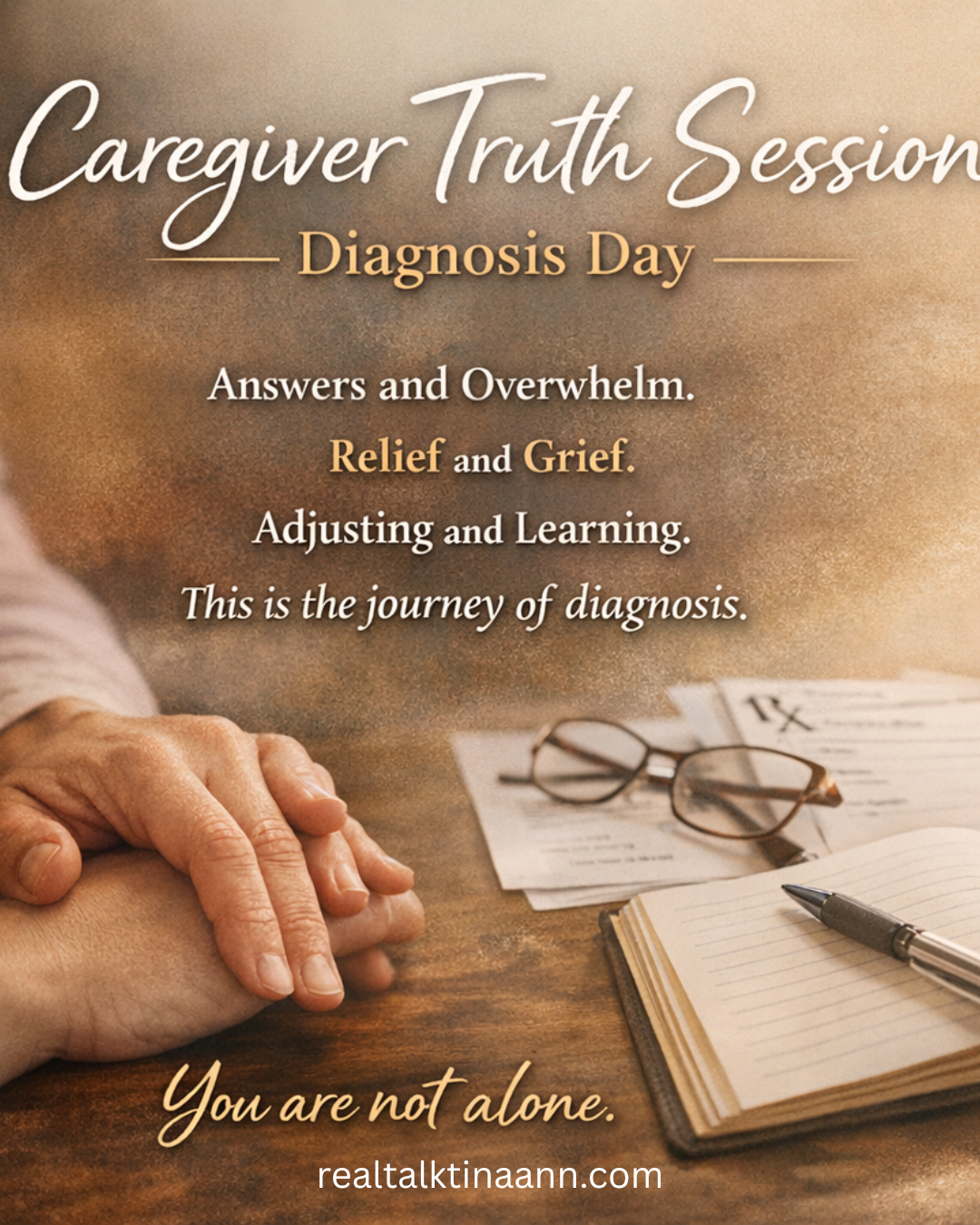
🌿 Caregiver Truth Session: Diagnosis Day
When Answers Bring Both Relief and Overwhelm
There are moments in parenting that quietly divide your life into “before” and “after.”
Diagnosis Day is one of them.
Recently, my son received additional diagnoses layered onto his original autism and ADHD. Anxiety. Fetal Alcohol Spectrum Disorder. Developmental coordination disorder. Written expression disorder. Dysgraphia.
Each word carried meaning. Each word carried weight.
And suddenly I was holding a list that felt larger than I was prepared for.
He has many needs. He learns differently. He processes differently. And ultimately, we chose homeschooling because traditional environments were not built for how his brain works.
I share this not as a clinician or expert, but as a parent who walked into an appointment hoping for clarity and walked out holding both answers and overwhelm at the same time.
Because diagnosis day is complicated.
The Emotional Truth No One Talks About
When new diagnoses arrive, something shifts.
There is relief because things finally make sense. Patterns that once felt confusing begin to fall into place.
There is validation because you realize you were not imagining the struggles.
But there is also grief.
Not grief for your child, but grief for the expectations you once carried without realizing it.
And there is a quiet moment where you recognize that parenting just changed again.
Knowing changes how you see everything.
And once you know, you cannot unknow.
Diagnoses Are Words. Understanding Is the Work.
The real journey begins after the appointment ends.
Medical language does not automatically translate into daily life. Parents are left learning how clinical terms show up at the kitchen table, during schoolwork, in social situations, and during everyday transitions.
For us, learning that his processing speed is slow changed everything.
Processing speed is not intelligence.
It is timing.
It means his brain needs space between input and response. Multiple demands can quickly become overwhelming. Silence is not refusal. It is processing.
Executive functioning challenges show up as task avoidance, but avoidance is often protection, not defiance. When something feels too big or too complex, the nervous system pulls back to preserve itself.
Transitions can feel enormous. What seems small to others can feel like a cliff edge internally.
And shutdown happens.
Shutdown is not a behavioral choice. It is the brain saying, “I cannot process any more right now.”
Understanding this changed how I parent. I stopped pushing harder and started creating softer transitions.
Learning Looks Different Now
Written expression disorder and dysgraphia reshaped our approach to education.
Writing by hand is not just difficult. It can be neurologically exhausting. Speech-to-text became a bridge between his thoughts and his ability to express them.
It was not lowering expectations.
It was removing barriers.
Social communication also requires intentional teaching. Social rules do not come naturally. They are learned through repetition, patience, and support.
Developmental coordination challenges affect how physical tasks feel in his body.
Add anxiety into the mix, and the world can feel heavy and unpredictable.
Homeschooling became part of our journey because learning needed to adapt to him, not the other way around.
He thrives with hands-on learning. Engaging material. Short explanations instead of long lectures. When too much language comes at once, cognitive fatigue sets in quickly.
This is not disinterest.
It is how his brain manages energy.
The Moment That Changed Me
After diagnosis day, there was a moment when everything went quiet inside me.
Nothing about my child had changed.
He was still the same kid. The same laugh. The same interests. The same heart.
The only thing that changed was my understanding.
Diagnosis does not create the child you see.
It reveals the child who has always been there.
And in that moment, I felt two truths at once:
Relief because I finally had language.
And grief because I knew the world might not always understand him the way I do.
Many caregivers know this space.
The place where love and overwhelm exist together.
Where you feel pride and exhaustion at the same time.
And if you have ever sat there, please hear this:
You are not weak for feeling both.
You are human.
What Diagnosis Does to the Caregiver
Diagnosis is not just information.
It is emotional whiplash.
Caregivers often become:
advocates
coordinators
translators between professionals
researchers
protectors
You hold systems together while holding your child close.
And if you feel overwhelmed, that does not mean you are failing.
It means you are carrying something heavy.
What Has Helped Us
Over time, we stopped trying to make him fit traditional expectations and started adapting our approach instead.
Some of the shifts that helped include:
speech-to-text instead of forcing handwriting
hands-on learning instead of passive listening
fewer words and clearer expectations
one task at a time
redefining success
Success is no longer about keeping pace with others.
Success is growth that honors how his brain works.
Diagnosis did not change who my son is.
It changed how I understand him.
It gave us a map.
And maps guide us forward.
A Message for Caregivers
If there is one thing I hope you carry with you, it is this:
Diagnosis is not the moment your child becomes limited.
It is the moment you gain the language to support them more deeply.
Caregiving is not about fixing.
It is about learning, adjusting, and loving someone enough to meet them where they are.
If you are in the middle of diagnosis, advocacy, or simply trying to understand your child better:
You are not alone.
You are not behind.
And you are doing more right than you probably realize.
🎧 Listen to the full Caregiver Truth Session episode on Real Talk with Tina and Ann.

I Thought I Needed to Fix My Child...