Brain Based Not Will Based
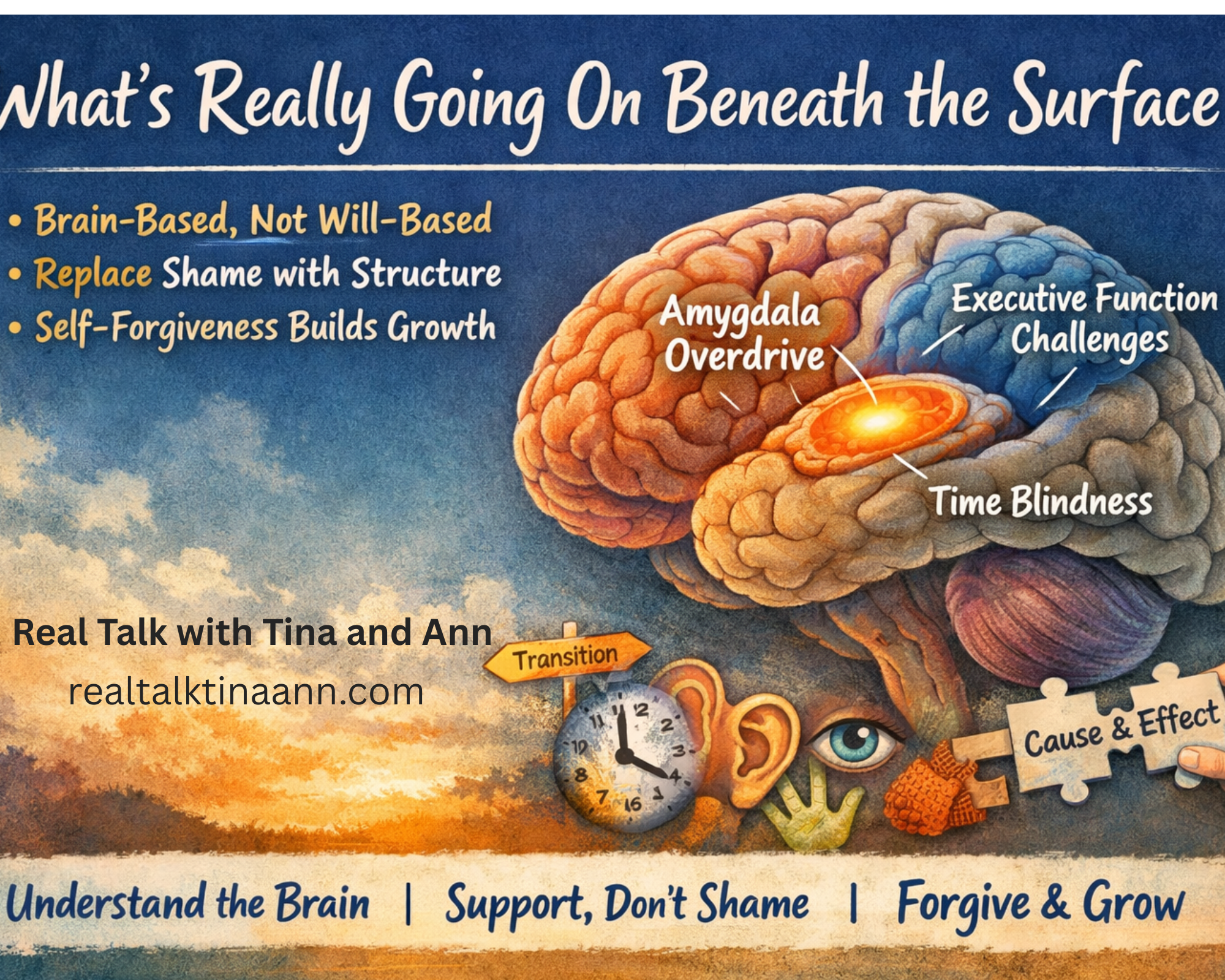
What’s Really Going On Beneath the Surface
There is a moment every parent, teacher, or caregiver has experienced.
You’re watching a child melt down over what seems small.
You’re watching a teen forget something again.
You’re watching an adult promise to follow through and then miss the mark.
And somewhere in the background, the question forms:
Why?
In our recent two-part conversation, RJ Formanek and I leaned into that question — and then gently replaced it with a better one.
Not why are they doing this?
But what is happening in the brain right now?
Because when you understand the brain, everything shifts.
This Is Brain-Based — Not Will-Based
When we talk about FASD and other neurodivergent profiles, we are talking about neuroanatomy. We are talking about real, measurable differences in how the brain develops, processes, stores information, and regulates emotion.
Behavior is not random.
It is shaped by structure.
Amygdala overdrive means a brain that scans constantly for safety cues.
Executive function limits mean a brain that struggles to plan, prioritize, sequence, and start tasks — even when it wants to.
Time blindness is not laziness; it’s a neurological reality.
Transitions aren’t defiance; they are processing demands.
When we understand this, shame loses its grip.
Replacing Shame with Structure
One of the most powerful shifts in our conversation was this:
Support works better than shame.
When executive function is limited, we scaffold.
We chunk tasks.
We use accountability buddies.
We externalize time.
When cause-and-effect reasoning has gaps, we replace “Why did you do that?” with “How can we set this up differently next time?”
When adaptive skills are delayed — what many call dismaturity — we become the external brain. We don’t remove expectations. We build structure around them.
Structure is not control.
Structure is safety.
And safety calms the amygdala.
A calm brain can learn.
The Hidden Struggles No One Sees
We also talked about the things people rarely connect:
Sensory profiles affecting sleep, textures, travel, food, clothing
Motor planning challenges that make handwriting exhausting
Anxiety that looks like opposition
Affect regulation that feels explosive but is actually overwhelm
When a nervous system is overloaded, behavior becomes the language.
If we only respond to the behavior, we miss the message.
Self-Advocacy and Real-World Supports
Neurodivergence doesn’t end at childhood.
Adults navigate workplaces that were not designed for their brains. They negotiate reasonable accommodations. They learn to advocate. They practice asking for written instructions instead of verbal ones. They create reminder systems and visual scaffolds.
And underneath all of that practical work is something even more important:
Self-forgiveness.
Because many neurodivergent adults carry decades of internalized shame. They were told they were careless. Lazy. Dramatic. Too sensitive. Not trying hard enough.
When you finally understand your brain, you don’t just gain tools.
You gain relief.
Self-Forgiveness Is the Foundation
Growth does not begin with self-criticism.
It begins with self-compassion.
When we trade shame for structure, punishment for support, and criticism for curiosity, we create environments where neurodivergent brains can actually thrive.
This conversation was not theoretical.
It was candid. It was lived. It was practical.
If you are a teacher, therapist, foster or adoptive parent, caregiver, or someone trying to understand what is really happening beneath the surface — this is the language you may have been looking for.
Share it.
Send it to someone who needs to understand that behavior is communication.
Send it to someone who needs to hear that brain-based disabilities require brain-based supports.
Send it to someone who is exhausted and wondering if they are doing something wrong.
Understanding changes everything.
Structure builds safety.
And self-forgiveness makes growth possible.
Diagnosis Day: Special needs Parenting